
Leaning into the 5S method
Projects that use lean methods intensively are three times more likely than non-users to finish ahead of schedule – and twice as likely to stay under budget – according to the Lean Construction Institute.
Klinck said that in his experience the most productive construction sites practise a lean method known by the mnemonic “5S”:
Sort: keep only what tools and materials you need in your workspace.
Set in order: keep these resources in good condition.
Shine: clean and tidy your workspace regularly.
Standardise: maintain a visual standard that everyone can understand and emulate.
Sustain: consistently apply procedures for doing the above regularly and audit these, focusing on their efficiency.
The 5S approach will be effective only if you can persuade everyone that it’s worth pursuing, he noted. A good way to do this is to create a well-structured, named system that’s easy to manage and make part of people’s daily routines.
Making the results measurable and introducing a competitive element can help to embed the method, added Klinck, who recommended making it “a team sport. Give a score in each area and then encourage teams to beat their own score or those of other teams.”
When it comes to rewarding the top-performing team over a given period, “you’ve got to link it to something that people onsite want”, he stressed.
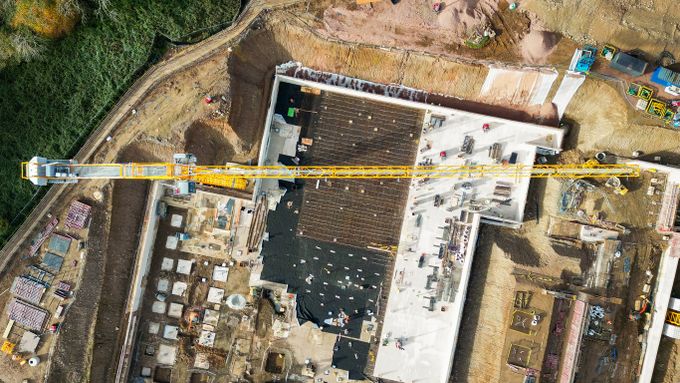
Research suggests that sites using lean methods intensively are twice as likely as non-users to stay under budget
Make time to slay the ‘hidden monster’
Delivery teams that are completing tasks on schedule and within budget tend to feel that they are “doing fine”, reducing their urge to improve, Klinck told the forum.
This feeling can be reinforced by project managers’ use of standard efficiency measures such as the cost performance index. But it’s likely that the schedule and budget has already made some allowance for inefficiency. Project leaders should therefore focus on waste elimination, he argued.
Waste in this context includes time lost through delays and non-value-added (NVA) activities, as well as resources squandered through overproduction, inefficient processes and defective work.
NVA activities are the “hidden monster” of many people’s working lives, consuming time that would have been better spent on tasks such as finding ways to improve, he said.
Given the chance, most managers can come up with more efficient processes, but they often lack “breathing space to think about how to do things better”.
Construction projects focused on stripping out waste tend to apply a just-in-time approach, Klinck said. This means that materials and equipment arrive onsite as and when they’re needed.
He cited the construction of the Riyadh Metro in Saudi Arabia as an exemplar. The project applied lean techniques to boost the efficiency of tasks including the installation of steel slabs and the application of sprayed concrete lining. Such improvements enabled cost savings on material and manpower that ran into millions of pounds.

Floris Klinck cited the Riyadh Metro as a good example of a construction project using lean techniques to boost efficiency
Learning from bridge collapses
The event also heard from Richard Fish, an independent bridge consultant who shared some highlights from his book Bridge Failures and Lessons Learnt (ICE Publishing, 2025).
His presentation covered several notable bridge failures, explaining the causes of each one. They included the collapse of the Polcevera Viaduct in Genoa, which killed 43 people in 2018. The bridge, built in 1960, was undergoing maintenance at the time of its collapse. Fish explained that, while problems were known to exist, work to address these had been subject to delays.
Other disasters he cited included the Dee Bridge (1847), the Tay Bridge (1879) and the Point Pleasant Bridge (1967), each of which claimed many lives.
This century, 85 fatal bridge collapses are known to have occurred worldwide – already more than twice the total recorded between 1950 and 2000. Many of these failed bridges had been built soon after the Second World War. Fish warned that underinvestment in upgrading similar such structures would increase the risk of further failures.
Get involved
The ICE Engineering Excellence Community holds three forums a year to discuss ways to deliver better infrastructure more efficiently. Covering topics ranging from data analytics to systems thinking, its sessions showcase the institution’s efforts to improve the sector’s performance. For information about future forum sessions, contact hannah.besford@ice.org.uk.
Hannah Besford is knowledge programmes specialist at the ICE
Image credits: iStock/anthonyjhall/Ceri Breeze/nmessana
Sign up to receive news from ICE Knowledge direct to your inbox.