“Strengthening what organisations already do”
PAS 4010 views productivity as both doing the right things (effectiveness) and doing those things right (efficiency). The standard will outline how all constituents of a project’s value chain must contribute to a productivity management strategy (PMS).
Running for the lifetime of a project, the PMS will state in clear, auditable terms what each member of the value chain must do to maximise productivity. It establishes frameworks for the ongoing measurement and improvement of productivity outcomes.
Project teams must then:
- systematically analyse the project’s “productivity drivers” – i.e. factors likely to significantly boost or restrict productivity;
- identify material constraints, risks and opportunities;
- plan how to maximise the opportunities and manage the constraints and risks;
- set targets based on agreed benchmarks;
- monitor progress against these targets as the project proceeds.
Hansford said that the team behind the new standard – which is being sponsored by the ICE and the Department for Transport – doesn’t intend PAS 4010 to spawn a cottage industry of “box-tickers”.
The aim is not to introduce “parallel processes, new bureaucracies or compliance burdens”, he explained. “Requirements for PAS 4010 must be embedded into existing reporting, assurance and audit functions. This is about strengthening what organisations already do.”

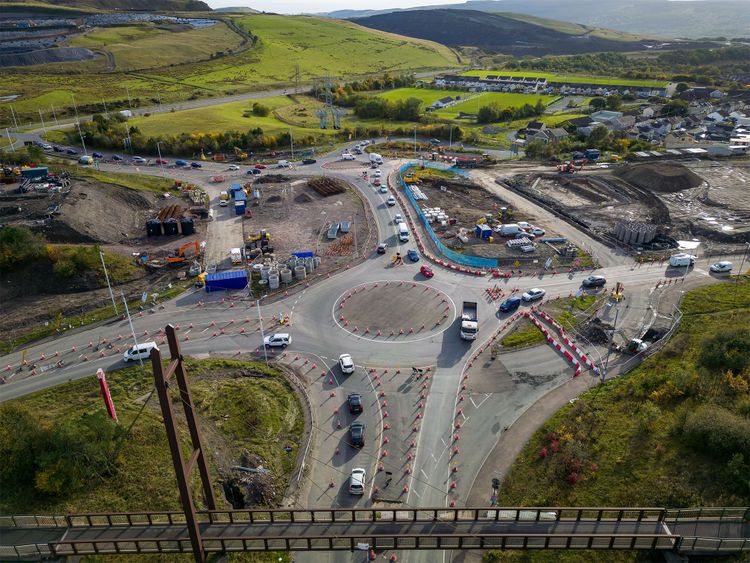
PAS 4010 will provide a framework for boosting productivity at every stage of infrastructure project delivery
A case study in production systems engineering
The forum also heard from Ed McCann, senior director at Expedition Engineering, who shared a case study showing how a large rail construction project has applied production systems engineering.
McCann, who served as ICE President in 2021-22, said his firm had worked within a framework of 11 productivity drivers co-developed by several large asset owners in the Infrastructure Client Group. Crucially, the project focused on optimising construction time.
Scheduling is typically driven by demand (what you want to happen), whereas it should be driven by supply (what the production system can make happen), McCann told the forum.
He pointed out that between 70% and 90% of the costs in large projects “are a function of time, so there’s a strong argument that the best thing we can do to become more productive is figure out how to go faster. We need to attack with rigour all the things we do that slow us down and don’t necessarily add value.”
Citing Todd Zabelle’s 2024 book Built to Fail, McCann explained that any production system has five interconnected “levers”: product design, process design, capacity contributors, inventory and variability. It’s vital to design the product for constructability, while capacity or inventory bottlenecks will inevitably reduce construction efficiency.
The variability lever is key to optimising a production system, he said, noting that different teams and individuals will complete tasks at varying speeds depending on their capabilities, tools and working environments.
Instead of allowing a “float” of spare time on a schedule, which will always be consumed, it’s better to tackle variability by providing buffers of capacity or inventory – that is, assigning more workers and/or machines to the job – to ensure its timely completion.
There’s a strong argument that the best thing we can do to become more productive is figure out how to go faster. We need to attack with rigour all the things we do that slow us down and don’t necessarily add value
Ed McCann, senior director, Expedition Engineering
In McCann’s case study, steelwork assembly was expected to be the biggest construction bottleneck. The solution was to keep as many activities as possible offsite and to adopt a production-line approach onsite.
This established a series of “static zones”, each dedicated to a different assembly stage. The size and number of steel sections that could be delivered to the site each day were carefully calculated and matched to the assembly schedule.
Get involved
The ICE Engineering Excellence Community holds three forums a year to discuss ways to deliver better infrastructure more efficiently. Covering topics ranging from data analytics to systems thinking, its sessions showcase the institution’s efforts to improve the sector’s performance. For information about future forum sessions, contact hannah.besford@ice.org.uk.
- Hannah Besford is knowledge programmes lead at the ICE
- Image credits: Shutterstock/Richard Whitcombe/Peter Titmuss