Engineers with "carbon tunnel vision" could overlook projects’ potential negative effects in other areas and so miss chances to mitigate those risks
TfL’s carbon management process has two distinct strands. The first is quantitative reporting aligned with the whole-life carbon assessment (WLCA) standard published by the Royal Institution of Chartered Surveyors. The second is a qualitative analysis of “carbon hotspots”, resulting in what TfL calls a carbon and resource plan stating how a project’s undesirable impacts will be mitigated.
Stakeholders in the project’s design, delivery and operational stages all contribute to the plan via an interdisciplinary workshop that longlists opportunities to cut resource consumption, energy usage and CO2 emissions.
These are then whittled down, prioritised and, where appropriate, allocated to members of the project team to manage. Outputs from the WLCA-aligned quantitative reporting are cross-referenced and tracked against these reduction opportunities.
“It’s not enough just to measure with an assessment or a model,” said O’Donoghue, stressing the need to “identify actions that can be taken throughout the project lifecycle to reduce carbon emissions and resource use”.
Scottish Water’s PAS 2080 experience
Ian Watt, capital investment manager at Scottish Water, spoke to the forum about the state-owned company’s strategic ambition to go “beyond net zero” by 2040.
In essence, this means that Scottish Water is aiming to make a positive overall impact on the environment rather than just a neutral one. That will entail using nature-based solutions and carbon sequestration methods to remove CO2 from the atmosphere.
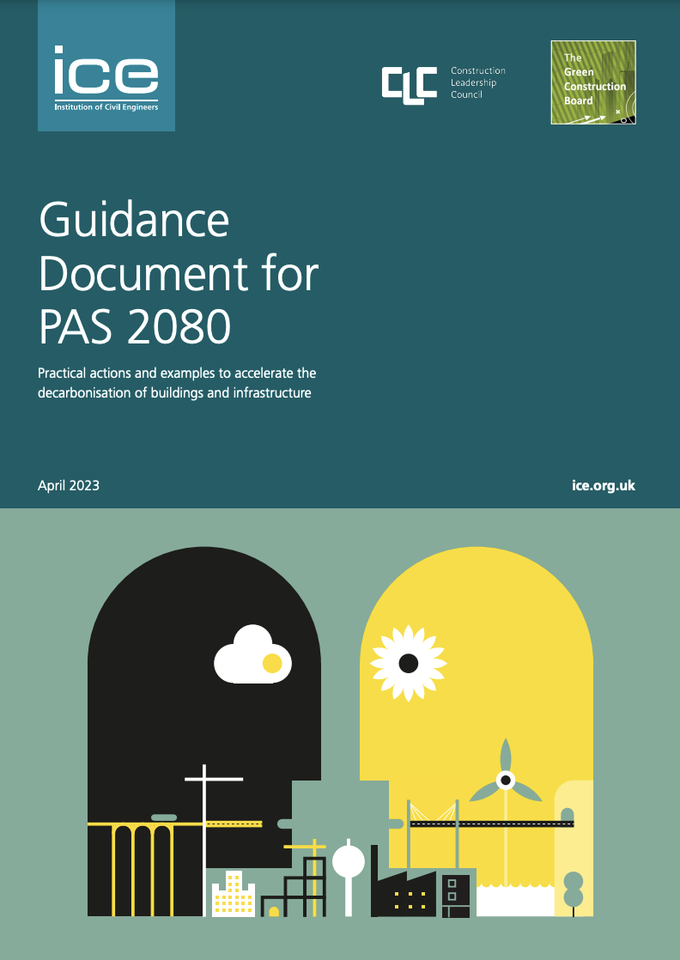
The ICE has published free guidance for PAS 2080 users
“We recognised very early on that we simply can’t continue to do what we’ve done,” Watt explained. “We can’t offset or plant our way out of this.”
Scottish Water’s commitments include using low-carbon concrete and steel in construction and ending its use of diesel-powered vehicles and plant. It already follows the principles of the PAS 2080 carbon management standard.
The company announced in February 2025 that it had become Scotland’s first public body to achieve the standard.
“PAS 2080 has created a new language in our net zero journey and fostered collaboration across our partners and suppliers,” Watt explained.
Adopting the standard, he added, has helped Scottish Water to set “very bold, inspiring targets” – including achieving net zero greenhouse gas emissions a decade sooner than Westminster’s deadline for the UK economy.
Get involved
The ICE Decarbonisation Community holds three forums a year to discuss ways to embed effective carbon management in infrastructure delivery. Covering topics ranging from lower-carbon materials to ethical decision-making, these sessions also showcase best-practice applications of PAS 2080. For information about future forums, contact amanda.rice@ice.org.uk.
Amanda Rice is climate programme specialist at the ICE
Image credit: Shutterstock/Frédéric Prochasson