Sign up to receive news from ICE Knowledge direct to your inbox.
Encourage universities to cover SuDS in degree courses, ICE is urged
The benefits of sustainable drainage systems go far beyond flood protection, experts tell the institution's Resilience Community Forum
A leading champion of nature-positive infrastructure has called on the ICE to advocate the teaching of sustainable drainage systems (SuDS) at degree level.
Emma Ferranti, associate professor in civil engineering at the University of Birmingham, was speaking at the autumn session of the ICE’s Resilience Community Forum.
She was attending the online meeting to showcase the work of the Trees and Design Action Group, a charitable network promoting the use of trees in placemaking.
Ferranti issued “a passionate call [to include] more trees and green stuff in civil engineering degrees, please”.
Stressing the importance of SuDS, she said: “We should be teaching undergraduate engineers about sustainable drainage. It’s an opportunity for the ICE to… push hard on that, because you moderate our degrees.”
Expect new guidance on SuDS soon
The meeting featured two other guest speakers: Greg Deeprose, senior landscape architect at Arup, and Anthony McCloy, a flood management expert and managing director of McCloy Consulting.
McCloy provided an update on some forthcoming guidance and training for retrofitting SuDS. This initiative is being led by the Chartered Institution of Water and Environmental Management.
The guidance, supported by the ICE and industry partners, will be freely available and paired with flexible training for engineers, designers and asset managers.
He stressed the need for practical, inspiring educational resources that go beyond technical manuals. These should give users the knowledge, skills and motivation required to deliver effective nature-based solutions.
How to avoid disrupting utilities
Both McCloy and Deeprose emphasised that SuDS such as rain gardens offer benefits extending well beyond flood protection. These include reducing the urban heat island effect, improving biodiversity and enhancing the public realm.
Installing SuDS isn’t just “dealing with a drainage problem”, Deeprose stressed. “This is not about making nice places either. It’s about creating functional, resilient places.”
He cited work to protect Mansfield from surface water flooding. The firm installed more than 300 SuDS in the Nottinghamshire town without modifying any utilities infrastructure to accommodate them.
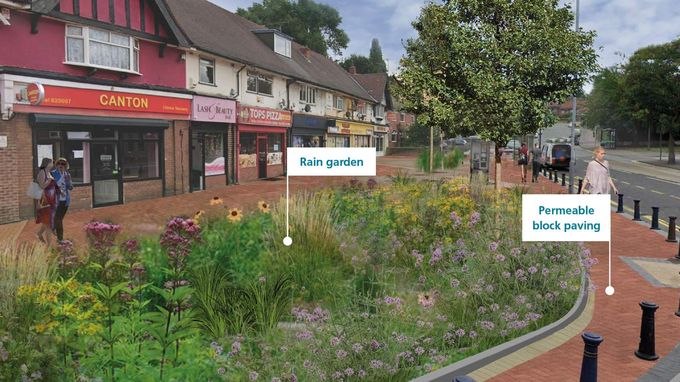
Sustainable drainage systems such as rain gardens and permeable block paving have been installed in Mansfield
UN Sustainable Development Goals (SDGs)
Linking our work back to the UN SDGs is a core part of the ICE’s plan and mission. This content ties in with the following SDGs:
- SDG 3: Good health and wellbeing

- SDG 6: Clean water and sanitation

- SDG 9: Industry, innovation and infrastructure

- SDG 11: Sustainable cities and communities

- SDG 13: Climate action