Proving the long-term value of resilience
Nature-based solutions can play a key role in resilience – e.g. by offering an eco-friendly, lower-carbon alternative to traditional hard flood management infrastructure. However, options such as sustainable drainage systems (SuDS) are often rejected during value engineering – a common decision-making process that prioritises short-term cost control in projects over their long-term benefits.
Forum members cited several possible contributing factors. These included:
the fact that it isn’t easy to quantify the benefits of climate resilience;
a lack of collaboration among stakeholders – e.g. between water companies and local authorities; and
the commonly held view that biodiversity is not an asset.
They called on the government to set an example and give stronger direction to asset owners in this area, warning that voluntary approaches would be inadequate.
This could be supported by developing better ways to both account for an asset’s climate resilience when making investment choices and gauge the value of nature-positive infrastructure.
The industry would also benefit from clearer guidance on how to implement the biodiversity net gain rules, which are confusing in their current form, some attendees argued.
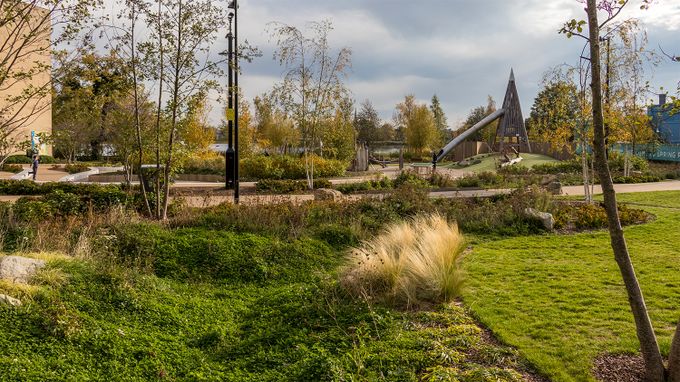
Sustainable drainage systems, such as that installed in Spring Park in London’s Woodberry Down, can play a key role in improving climate resilience in urban areas. Image credit: Susdrain
Integrating construction and maintenance
Greening the built environment entails both retrofitting existing infrastructure with natural resilience features and designing these into new assets.
The government’s 10-year strategy allocates £24bn to road maintenance and pledges greater certainty of funding for the upkeep of social infrastructure such as public buildings.
In theory, these investment decisions should improve resilience – e.g. by funding the installation of SuDS near highways and buildings. But the traditional split between asset owners’ capital and operational budgets often hinders such works, which straddle construction and maintenance. Guidance on adopting a more integrated approach to planning resilience would therefore be welcome.

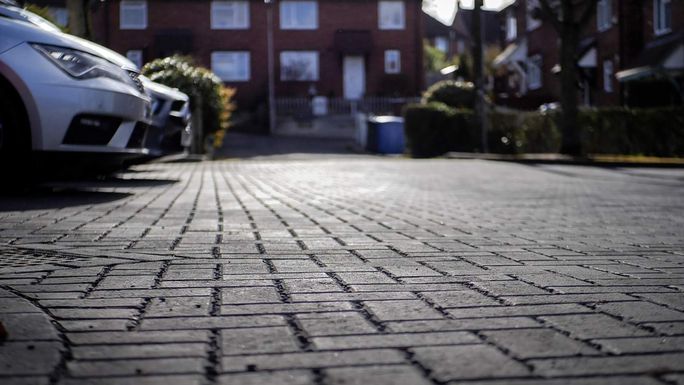
Bridget Joyce Square, London: the local school’s onsite caretaker took on responsibility for maintaining the rain gardens and permeable car park surfacing. Hammersmith and Fulham Council’s highways team will maintain all other features, including the basins and chambers
Forum members noted that engineers can aid this integration by designing green infrastructure that’s relatively cheap and easy to maintain, then factoring the costs of its upkeep into their calculations of project costs.
Building on ideas discussed in the forum’s previous meeting, some participants advocated the mandatory inclusion of nature-based solutions in civil engineering degree courses. This would give students a better grasp of the importance of climate resilience and biodiversity – and of how to achieve both outcomes.
Guidance on the horizon
The forum also discussed PAS 3090, the forthcoming standard on how to use adaptation pathways to prepare infrastructure for uncertain climate scenarios.
Participants noted that this and any other standard to be published on the subject will have to account for the ever-changing climate and policy landscape.
Some pointed to a wider need for practical guidance on applying a nature-first approach to infrastructure planning decisions, especially the task of embedding resilience requirements into contracts for asset design and operation.
Others expressed the importance of better international knowledge-sharing on how various countries have included resilience and biodiversity considerations in their infrastructure standards.
Get involved
The ICE Resilience Community holds three forums a year to discuss ways to make infrastructure systems more resilient. Covering topics ranging from climate adaptation finance to sustainable drainage systems, these sessions highlight best practice in integrating resilience and nature in the planning, delivery and maintenance of infrastructure. For information about future forums, contact billie.donovan@ice.org.uk.
- You can hear more about retrofitting SuDS at the ICE’s joint session with the Chartered Institution of Water and Environmental Management at Futurebuild 2026 in London on 12 May. Speakers will include Fiona Barbour (Mott MacDonald), Anna Hastings (Southern Water), Anthony McCloy (McCloy Consulting) and Kevin Barton (Robert Bray Associates). Register today for free tickets to the event.
Sign up to receive news from ICE Knowledge direct to your inbox.