1. Competence
Last year the ICE established two specialist professional registers: the Health and Safety Register and – in collaboration with the Institution of Structural Engineers (IStructE) – the Higher Risk Buildings Register. These are designed to demonstrate members’ specialist competence in safety risk management.
The Health and Safety Register has two levels – registrant and advanced registrant – aimed at professionals at different stages of their careers. Applicants must hold a technician or higher membership with an Engineering Council-licensed body and demonstrate advanced health and safety risk management knowledge via an assessment.
Scott Steven, chair of the Health and Safety Register committee, said that, although qualification is a “binary model” in the sense that applicants either pass or fail, the register is moving towards a “development model” under which professionals continually improve their knowledge.
Those early in their careers should be encouraged to develop the health and safety behaviour assessed on the register, even if they are some years off seeking to join it, he said. Equally, more experienced engineers should continue to learn and demonstrate their competence once they are registered.
Steven said that having a body of people who are recognised as competent in risk management would help to improve standards. This would encourage safer practices, leading ultimately to better outcomes.

Joining the Higher Risk Buildings Register is a powerful way for members to demonstrate their competence
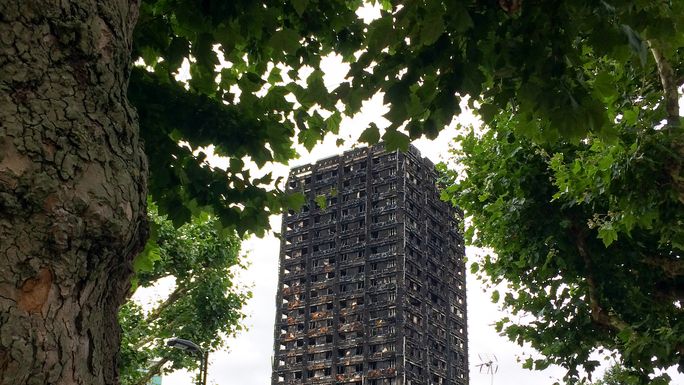
The forum also heard details about the Higher Risk Buildings Register. The Building Safety Act 2022 obliges clients to hire competent experts for higher-risk buildings (HRBs). The act defines these as buildings containing at least two residential units (or a hospital or care home) that are at least 18m tall or have at least seven storeys.
Chris O’Regan, chair of the Higher Risk Buildings Register committee, said that about 20 people have joined the register since its creation last year.
Applicants must be professionally qualified ICE or IStructE members with at least five years’ experience and relevant expertise in HRBs.
“Being on this register, you gain a verification of your competence from an independent source,” O’Regan explained. “It’s important and powerful to say that ‘I’ve been assessed by my peers to determine that I’m competent to work on higher-risk buildings’.”
2. Learning from failure
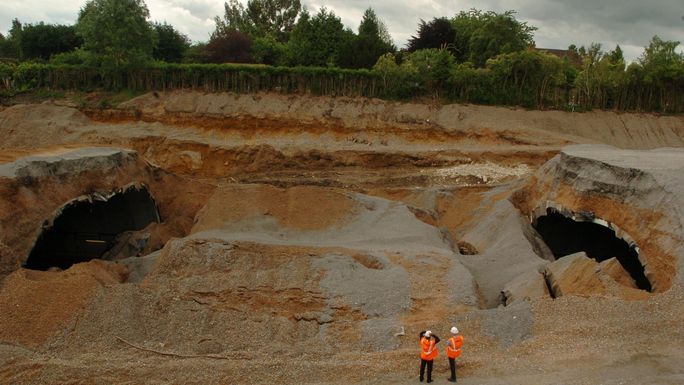
The ICE has pledged to improve its members’ understanding of common causes of risk and failure. It is encouraging members to study notable failures as part of their CPD by reading official inquiry reports and case studies such as the Lessons Learnt series on the Knowledge Hub.
They are also advised to learn from reports on failures, near misses and precursor events published by Collaborative Reporting for Safer Structures UK (CROSS-UK).
“Learning from failure promotes continuous improvement,” Steven said. “But what I’d actually tell people is: don’t learn from failure; learn before failure, because that’s a lot less painful.”
Steven highlighted the large proportion of small contractors that have been prosecuted under the Construction (Design and Management) Regulations 2015. He noted that a lack of competence was less of an issue in many cases than the stressful conditions under which people were working.
“Is it that we haven’t got enough competent people in the industry? Or is it that we have people who are sufficiently competent but they are working… under severe pressure… and that is influencing their behaviour?” he asked.
3. Culture and practice
The ICE has also turned its attention to gaps in the standards and guidance that support safety risk management in the built environment.
Dr Hazel McDonald, chief bridge engineer at Transport Scotland and co-chair of the SRAG’s industry guidance task group, reported on the findings of a recent roundtable on this topic.
She said that, while standards and guidance exist, they are fragmented and applied inconsistently. Smaller firms in particular are failing to embed them sufficiently in their decision-making.
There are plenty of standards covering the design of new infrastructure, but there is much less guidance available to help those working to extend the life of ageing assets, McDonald added.
The group identified the need to strengthen competence standards, place greater emphasis on asset management, improve clients’ understanding of safety risk management and encourage the wider adoption of good practice.
For further information about the SRAG’s activities, visit the institution’s safety page or read this blog post by ICE trustee Dr Ohis Ilalokhoin on the response to Building Safeguards. You can contact the SRAG by e-mailing srag@ice.org.uk.
Get involved
The ICE holds three Engineering Excellence Community Forums a year to discuss ways to deliver better infrastructure more efficiently. Covering topics ranging from data analytics to systems thinking, its sessions showcase the institution’s efforts to improve the sector’s performance. For information about future forum sessions, contact ICE knowledge programmes lead hannah.besford@ice.org.uk.
James Brockett is knowledge editorial specialist at the ICE
Image credits: Shutterstock/Ajit Wick/I Wei Huang