

David Porter, ICE President 2025-26
Foreword: a marathon and a sprint

In June 2025, the UK government announced its ambition to deliver “at least” £725bn worth of projects with the publication of UK Infrastructure: A 10 Year Strategy. This differs from previous such documents because it covers the building of homes and social infrastructure including schools, hospitals and prisons in addition to economic infrastructure such as roads, power stations and reservoirs. The strategy aims to meet some of the biggest challenges facing the country – for instance, boosting climate resilience, improving social inclusion and making a clean energy transition.
The strategy and accompanying UK Infrastructure Pipeline – a list of priority projects for which there’s a proven need – give the construction industry a clearer view of its upcoming workload than it’s had for many years.
While that’s hugely welcome, it also presents some challenges. With the strategy indicating a 50% increase on public infrastructure spending in 2015-25, there’s so much to do by 2035. Can the supply chain increase its productivity, work smarter and boost its capacity sufficiently to deliver everything being asked of it?
This year’s State of the Nation report explores that question, guided by the insights of three expert panels convened by the ICE and extensive wider research, including learning from the experiences of other countries.
For those involved in delivering infrastructure, the headline messages are as follows:
- More collaboration is required if we are to meet the challenge. Greater success will be achieved when organisations work well together within contractual environments that encourage this.
- Large-scale innovation is crucial. This must involve the rapid uptake of non-traditional solutions spanning investment, procurement and technology.
- The industry must urgently build its capacity and capability, with a large and sustained recruitment and training programme and more efficient ways of working to make the most of existing resources.
The National Infrastructure and Service Transformation Authority (NISTA), the body responsible for infrastructure planning and delivery created by the National Infrastructure Commission’s merger with the Infrastructure and Projects Authority, is appealing to the industry to act on those messages. Doing so is key to getting the pipeline flowing.
Investor and consumer confidence has been dented by the poor performance of both existing infrastructure and high-profile construction projects in recent years. The strategy represents a chance for the industry to start a positive new chapter and regain trust. Clients must build confidence by clearly signalling their needs. The industry can then show investors that it can execute projects efficiently and effectively. To support this, significant improvements to supply chain capacity and capability are needed to unlock funding and help bring projects to market.
For the strategy to succeed, real progress has to be demonstrated as soon as possible. Everyone in the sector must play their part if we are to deliver the infrastructure improvements that society needs so that people and the planet can thrive.
While infrastructure policy in the UK is devolved, the 10-year strategy aims to cover all four nations and most of the infrastructure challenges discussed in this report are UK-wide concerns. With elections due in Wales and Scotland in May 2026, and in Northern Ireland by May 2027, it will be vital to build political consensus to ensure that all future administrations recognise the importance of infrastructure in supporting economic and social activity.
State of the Nation 2025 highlighted the worrying deterioration of ageing infrastructure around the UK, with investment in asset management falling well short of requirements. Concern has only deepened since then, especially in the transport sector and most acutely among the local authority teams struggling to maintain our vast council-run road network. There is now a substantial, but poorly quantified, risk to public safety, transport efficiency and resilience.
The government has recognised the problem. Its infrastructure strategy includes the goal of rebalancing capital investment towards asset management. This year it will start trialling a new asset condition index to guide expenditure. It will aggregate data on condition, performance, risk and reliability into a single score.
This pilot will focus on the strategic road and rail networks, which have had more money than local highways authorities to spend on repairs. Councils must also work to demonstrate their urgent need for more maintenance funding while lacking the resources to fill gaps in their evidence base. This report identifies potential solutions to improve how local authorities fund and prioritise maintenance.
The infrastructure strategy does signal a long-needed determination to consider whole-life cost, performance and value. But this has to be sustained, as it will take time to prove the worth of condition- and performance-based asset management in regulated organisations before there’s a case for applying it to council-run assets. The question is: how much further will these decline before that happens?
Civil engineers and the wider industry have long called on the government to set policy for the long term in a way that transcends political cycles. The 10-year strategy is an attempt to do that. The opportunity – and challenge – for civil and infrastructure engineers now is to support that change and help to deliver it.

Infrastructure in 2026
Introduction: a Herculean to-do list
The government’s £725bn infrastructure strategy sets a formidable 10-year challenge for the industry, which must solve several systemic problems to be able to deliver it
In every film of the Mission: Impossible franchise, a recorded briefing throws down the gauntlet with the words: “Your mission – should you choose to accept it…”
The Impossible Mission Force never declines the offer, of course. And it always delivers, thanks not only to heroic determination but also to skilled teamwork. Its members gain trust and respect in doing so, cementing their preferred-supplier status for the next high-stakes quest.
Now swap Tom Cruise & Co out for civil and infrastructure engineers, make the mission “execute the UK’s 10-year infrastructure strategy” – and prepare for a real action epic.
This year’s State of the Nation report examines our sector’s mission-readiness to deliver the government’s infrastructure strategy for 2025-35. As a global body, the ICE knows that the UK is far from alone in facing these challenges, but the stakes here are indeed high. The ambitious plan, costing more than £725bn, schedules an increase of about 50% on the total spent on public infrastructure over the previous 10 years.
Blockbuster transformation programmes are being lined up in the energy and water sectors. In pursuit of energy security and decarbonisation, 100GW of generating capacity will be needed, plus adequate energy storage. A “rewiring of Britain” will include reconfiguring the nation’s transmission and distribution networks.
Transformation in the water sector involves creating nine large reservoirs – the first for 35 years – and several inter-catchment transfer pipelines. That’s on top of approved business-as-usual spending in Ofwat’s current regulatory period (2025-30) on tasks such as cutting leakage. This will be almost double the equivalent outlay in 2020-25.
Transport projects will also place huge demand on the construction industry. The building of HS2 will extend into the mid-2030s, for instance, as will the multibillion-pound dualling of the A9 between Perth and Inverness. Work is expected to start this year on: the £6bn Bletchley-Cambridge section of East West Rail; the £10bn Lower Thames Crossing, linking the A2 in Kent with the M25 in Essex; and Gatwick airport’s expansion to a twin-runway operation. Heathrow airport hopes that this year it will at last win permission to add a third runway.
Then there’s the planned addition of 1.5 million homes, 35 hospitals and 20,000 prison places. More new schools and colleges are scheduled, too, along with upgrades to the nation’s existing education, health, municipal and judicial estates.

Earthworks on HS2 finished in 2025, but the construction stage is set to continue well into the next decade (credit: iStock/NORRIE3699)
Mission-ready?
Last year the National Infrastructure Commission and the Infrastructure and Projects Authority – public bodies with a deep understanding of civil engineering – merged to form NISTA.
This new authority recognises that the infrastructure sector’s fragmentation is hindering productivity. It wants to see a more joined-up approach right across the supply chain.
Shortly after the government’s 10-year strategy, NISTA published the Infrastructure Pipeline, a list of ongoing and planned projects for which there’s an identified need. Both documents make the case for change and are tools for achieving it.
By including several big programmes that will last well beyond 2035 and by aggregating social and economic infrastructure, NISTA has challenged short-termism and siloed thinking. The industry simply can’t complete everything in the pipeline if it continues to work from project to project and operate within traditional confines.
The key objectives of NISTA, and the government, are to promote a more holistic long-term view of infrastructure that:
- recognises interdependencies among various systems;
- obtains greater value from infrastructure through effective asset management;
- improves coordination between projects; and
- reduces risk to attract private investment.
All of this will require unprecedented levels of cooperation between organisations across the infrastructure industry and the public and private sectors, supported by new commercial and contractual models.
Most of the experts contributing to this report were excited by the opportunity NISTA has created to change the situation, yet anxious about the industry’s ability to seize it. They raised four mission-critical cross-cutting issues that this section will address in depth:
- Boosting capacity and productivity in the industry, especially the supply chain.
- Promoting collaboration with better commercial arrangements and enterprise working.
- Applying innovative investment models.
- Making the most of digital technology and data.
1. Boosting capacity and productivity
The infrastructure supply chain is short on people, equipment and materials. Competition among projects for these scarce resources will push up costs. Those that fail to secure what they need will be delayed.
People
For years, too few young people have studied STEM subjects or chosen vocational careers in construction. This has resulted in an undersized and ageing workforce that’s running short on expertise. Projects are being delayed by the lack of skilled professionals with key qualifications in certain fields.
That’s particularly true in the case of specialists authorised to sign off safety-critical designs and procedures. There may be scope to streamline and standardise some processes in this area, but care must be taken to avoid compromising quality and safety. There must also be clear rules about the situations in which checks and approvals are required.
In certain fields, checkers and approvers are personally liable for the consequences of their decisions – the engineers on the all reservoirs panel, for instance. Substantial changes would be hard to negotiate wherever such conditions apply, although it is worth questioning whether the underpinning legislation (in this case, the Reservoirs Act 1975 for England and Wales) remains fit for purpose.
The skills shortage is problematic for organisations ranging from councils to owners of strategic national infrastructure (SNI). In the words of an engineering lead at one SNI supplier, the Infrastructure Pipeline includes many “A-list projects that will be magnets for capable engineers. B-list projects are going to suffer.”
While the B list may include relatively unappealing projects, it still features essential works such as shoring up key transport assets – one of the main themes of State of the Nation 2025.
Recruitment is likely to become even tougher in remote locations, including that of the Sizewell C nuclear project on the Suffolk coast. To address this problem, Sizewell C has sponsored the establishment of a new college nearby, so that local people can learn construction skills on their doorstep and then help to build the power station.

Sizewell C and its suppliers are aiming to create 1,500 apprenticeships during construction (credit: Sizewell C)
While bringing more young people into the sector through professional and vocational education is clearly essential, one interviewee noted that it still takes “five to seven years for them to become really useful”.
Such is the urgency of the problem that some organisations are approaching prisons and welfare services with a view to opening secure job opportunities for rehabilitated offenders and benefit claimants deemed capable of working. Deputations are also being made to the government to grant visas for qualified foreign workers.
Consultants potentially have greater flexibility than contractors when it comes to employee development. Most encourage their staff to move between specialisms, but even that’s not as straightforward as it might seem.
An interviewee explained that an individual’s “identity becomes closely linked with the sector they’re familiar with. It’s surprisingly hard to persuade people to work in a new sector, even though it calls for essentially the same skills.”
Recommendation: the government should work with industry to publish a holistic workforce strategy that supports the aims outlined in its 10-year infrastructure strategy, its industrial strategy and its clean energy jobs plan.
Hong Kong’s high-tech productivity solution
Technological innovation is a key part of the Hong Kong government’s workforce planning for the construction industry. Having assessed the capacity demands of its infrastructure pipeline, the government believes that investing in training alongside technology will attract more talent to the sector and improve its productivity.
The increasing standardisation of infrastructure is enabling machinery to play a bigger part in construction, complementing skilled workers.

A semi-autonomous drilling robot at the Centre for Future Construction (credit: Construction Industry Council, Hong Kong)
With this in mind, the Centre for Future Construction – established in May 2025 as part of the Hong Kong Institute of Construction – is training new entrants to the industry to operate robots that can perform precision tasks such as drilling and wall finishing.
The centre at Kowloon Bay, which is expected to train about 7,000 people a year, also contains interactive facilities showcasing the sector’s latest applications of AI and digital twin technology.
Equipment
Four factors can play a role in making construction machinery more widely available. They are servitisation, electrification, standardisation and automation.
Servitisation: Rolls-Royce provides “power by the hour”, leasing out its aero engines rather than selling them. An airline will pay to use them based on flying hours, while the company monitors their performance, providing repairs, upgrades and support. Seeing value in this approach, construction equipment manufacturers are moving to a similar model, promising to keep their machinery working harder for longer and minimise downtime.
Electrification: Squaring the UK’s infrastructure goals with its net zero commitments means phasing out diesel-powered machinery. Advances in battery chemistry and power management have transformed the performance of electric vehicles, ranging from cars to dumper trucks, and big manufacturers are scaling up production of both tethered and battery-powered plant. But no mechanism yet exists to prioritise mains connections to construction sites, leaving many to run on diesel until they rise to the top of energy suppliers’ lists. Given the high demand for electricity on many sites, it’s in the public interest to have a process to expedite their connection and thereby slash their CO2 emissions.

Volvo introduced the first battery electric 40t articulated hauler in 2025 (credit: Volvo)
Standardisation: It should be possible to move specialist machines and equipment from one job directly to the next, but they often spend long periods being retrofitted to meet specifications set by the new project before they can leave the garage. While plant must meet statutory environmental and safety criteria, there’s no industry standard for extra features specified by projects. An agreed specification for plant would enable contractors and hire firms to order compliant machines straight from manufacturers, or for manufacturers to supply them under service contracts. The quarry industry’s voluntary Safer by Design guidance offers a feasible template for the construction sector to build on.
Automation: With self-driving vehicles set to become legal on UK roads this year, specialist contractors are wondering whether the time has come for fully autonomous plant. Self-operating machines should help to ease the sector’s labour shortage. If rolled out alongside electrification, they could enable longer – possibly continuous – operating hours. Automated machines don’t require floodlighting after dark, while electric ones are much quieter than their diesel equivalents. Such factors might help to persuade the neighbours of big projects to accept round-the-clock activity if they’re promised less long-term disruption.
Materials
The UK imports more than two-thirds of the steel used in construction and about a quarter of the cement. A truly global web of supply already exists – and increasing demand is extending and entrenching it. Looking ahead to a decade of intense activity, the industry must address rising transport-related CO2 emissions, even if what’s being transported is “low-carbon material”. Ground granulated blast-furnace slag, for instance, is increasingly being sourced from eastern Europe, China and India.
Similar challenges exist for those sourcing more specialist materials. Alongside the UK’s nine planned reservoirs, there will be an extensive modernisation programme for coastal defences. British quarries supply about two-thirds of the rock armour these structures use, with the rest coming mainly from Denmark, Germany and Norway. Industry estimates suggest that the UK’s annual demand for rock armour could be 50% greater within five years.
Electrical grid upgrades mirroring what’s happening in the UK are in progress around the world. That has heightened global competition for converters, transformers and other specialist equipment. Delivery times and prices have increased over the past five years and further rises are forecast.
Nuclear projects create demand for small numbers of specialist components that aren’t widely available. Very few companies are equipped to make them, prompting projects such as Hinkley Point C to cover the costs that manufacturers incur when setting up for production. Unless further orders are imminent, these firms typically disassemble their production processes and lay workers off after delivering the batch required. Nuclear projects that fail to dovetail with preceding ones may therefore incur unnecessary set-up costs and lengthy waits.
Several clients and consultants interviewed for this report hope that pressure on skills and materials will be relieved by the wider adoption of the Modern Methods of Construction approach, which includes techniques such as Design for Manufacture and Assembly, often known collectively as industrialised construction. The government signalled support for industrialised construction in its June 2025 spending review, also mentioning it in its infrastructure and industrial strategies.
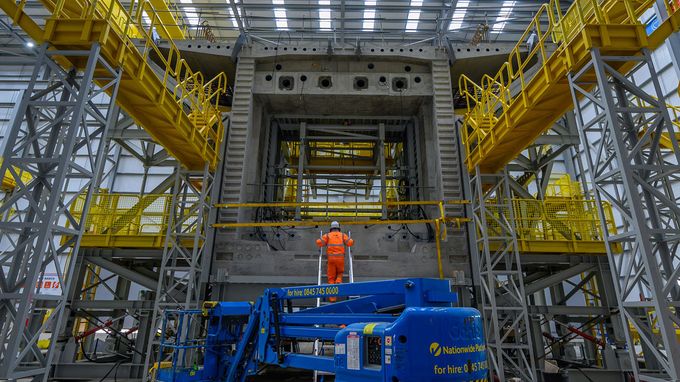
HS2’s innovations include using factory production for the precast concrete Colne Valley Viaduct (credit: HS2)
Industrialised construction offers a broad range of savings over the traditional approach. For social infrastructure such as hospitals and schools, it can offer savings of up to 50% on time, 40% on labour, 30% on materials and 20% on cost. For economic infrastructure where there’s a lot of scope for repetitive processes, the potential maximum savings are 60% on time, 50% on labour, 25% on materials and 25% on cost.
As well as reducing capital costs, industrialised construction offers improved asset durability thanks to superior build quality, reducing maintenance costs and enabling assets to stay in service for longer. The UK’s adoption of industrialised construction has so far been limited. While there have been pilot projects, large-scale uptake has been hindered by an adherence to traditional design approaches and procurement models; a lack of expertise in new methods; and limitations in the supply chain.
Using industrialised construction methods for social infrastructure such as hospitals can save up to 50% on time, 40% on labour, 30% on materials and 20% on cost
“Coordination” was a recurring topic of discussion at the three research roundtables that informed this report and with the other experts interviewed. The UK will get the infrastructure it needs “only if we plan it very deliberately and tackle it collaboratively”, said one, voicing the view of many.
“Treating each project in isolation leads to inefficiencies and shortfalls,” said another. “A more coordinated approach across projects can smooth demand and optimise resource utilisation.”
Several contributors called for a “systems approach” to delivery that would take a regional view of projects. To this end, NISTA is developing sectoral and regional spatial plans designed to help the government spot and resolve potential conflicts and highlight possible synergies.
One contributor noted: “Where projects are running side by side or overlapping, everyone would benefit if there were shared site investigation and survey data, plus coordinated planning, procurement, site access, stakeholder engagement and logistics.”
Another pointed out that this approach is beneficial only if clients don’t seek to require contractors to assume liability for such data.
Bringing it all together
Contributors also advocated a data-informed approach to coordination. AI is well suited to the task of assessing construction demand versus supply chain capacity, spotting likely bottlenecks and informing project scheduling decisions.
The Infrastructure Pipeline provides only basic project data at present: name, location, indicative cost and target start date. But NISTA plans to add information that will better indicate what resources will be needed.
In 2025, the Construction Industry Training Board and the University of Dundee started work to forecast demand for skills from the pipeline, highlight shortages (by sector and region) and identify potential training pathways. They are due to report their findings this year.
Alongside coordination, commitment and trust are required. By publishing the Infrastructure Pipeline, for instance, the government is trying to signal its confidence that the listed projects will go ahead.
“The pipeline shows where work will come from. We’re asking industry to invest in securing its future workload,” explained one interviewee from the government.
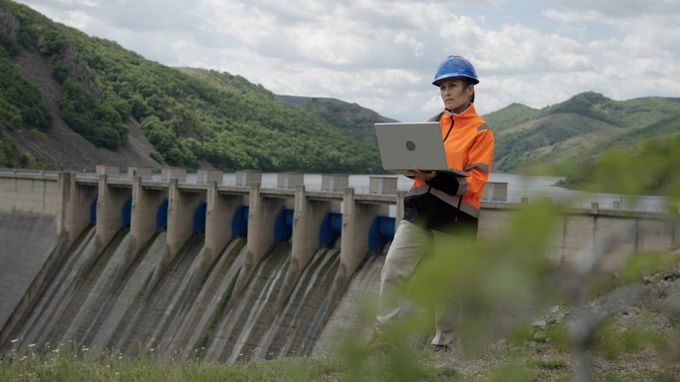
Much depends on the success of the infrastructure sector’s digital transformation over the coming decade (credit: iStock/Daniel Balakov)
Despite this, there is widespread wariness in the sector. This is born of historic client prevarication, revoked consents, delays and cancellations. One experienced industry interviewee spoke for many by pointing out that suppliers “won’t invest in skills or place orders until funding is secure and contracts are signed”.
Nonetheless, the industry has a vested interest in achieving mission-readiness. Mobilising quickly and being able to deliver projects to the satisfaction of clients and investors will build their trust and encourage further investment.
Confidence begets confidence, noted a senior figure from within the supply chain. If it can seize this moment with self-belief, the industry could gain real momentum.
Recommendation: making more data about current and future project requirements widely accessible, through future iterations of the Infrastructure Pipeline, will give manufacturers and suppliers the ability and incentive to boost UK production.
2. Promoting collaboration
A select band of infrastructure clients have been using integrated project delivery models since the noughties and consistently achieving strong results. In 2018, the principles they applied were distilled into the Infrastructure Client Group’s Project 13 initiative.
Relatively few clients in the wider industry have adopted its collaborative enterprise model, with most persisting with familiar yet flawed transactional approaches. But now there is broad agreement that the 10-year strategy cannot be realised unless this situation changes.
Enterprise working requires asset owners, contractors, consultants and suppliers to form an integrated enterprise that is focused on shared outcomes. Its commercial and contractual terms foster transparency and shared accountability, while also encouraging proactive risk management, rewarding innovation and incentivising good performance.
An example of this in action is National Highways’ road investment strategy (RIS), which itself drew several key lessons from enterprises in the water sector. Foremost of these is the importance of certainty, which is provided by planning investments in five-year blocks. Over the course of RIS2 (2020-25) and entering RIS3 (2025-30), National Highways has taken pains to avoid the cyclical fluctuations in workload that have characterised the water sector’s asset management periods. And it has used commercial arrangements that reward high-performing suppliers by giving them preferred status on future projects.
National Highways stresses the importance of “keeping things simple”, with a manageable number of clear objectives. These have covered aspects such as health, safety and wellbeing; customer focus; innovation and continuous improvement; carbon reduction; and collaboration.
Recommendation: more public sector asset owners should promote certainty in the supply chain through multi-year framework agreements for suppliers. These should set key performance indicators, targets and rewards to incentivise high achievement. Agreements should be rolling or negotiated well in advance to avoid cliff-edge uncertainty.

Thames Tideway’s enterprise model has been credited with helping to minimise the project’s schedule slippage (credit: Stewart Turkington)
Spotlight on procurement
While enterprise working won’t be right for every project, clients should always question their choice of procurement route rather than defaulting to familiar ways.
There is significant variation in how the sector handles procurement during the design and delivery phases – and not all of this serves a purpose. Greater standardisation would benefit clients and contractors alike.
Instead of using bespoke and often costly contracts and processes, often with an imbalance of liabilities, they may well be better off with well-defined solutions that they can match to different circumstances and obtain a predictable pathway for project development. Standardised templates help to build trust and confidence across the sector.
It’s also vital to align procurement with the full range of outcomes a project is seeking to deliver – including social and environmental benefits – and the supply chain’s ability to deliver these, rather than focusing on cost alone and encouraging a race to the bottom. If all of the desired benefits are clear at an early stage, there’s a far greater chance that the supply chain can be engaged in a way that maximises them throughout the project.
Supporting teamwork with standards
Standardisation is one of the ways in which the institution is aiding the collaborative delivery of positive infrastructure outcomes.
The ICE worked with the British Standards Institution (BSI) to produce the PAS 2080 carbon management standard, for instance. Originally published by the BSI in 2016 and updated in 2023, PAS 2080 is being used widely by building and infrastructure clients and suppliers – along with the ICE’s associated guidance document – to make the minimisation of assets’ lifetime CO2 emissions a key outcome of their projects.
This year the institution is working to produce two further standards: PAS 3090 (climate adaptation pathways for infrastructure systems) and PAS 4010 (maximising productivity in infrastructure design and delivery).
Digitally enhanced contract drafting
One tool that’s making collaborative contracting more accessible is NEC Digital, a new online drafting platform for the internationally recognised NEC suite of contracts.
Launched in November 2025, it enables clients, contractors, consultants and project teams to draw up contracts together, providing shared visibility from the outset.
The subscription-based service guides users through the whole drafting process, giving side-by-side views of the relevant options available. Users can select main and secondary clauses and create their own bespoke Z clauses.

NEC Contracts’ new offering has brought the contract drafting process “into the digital age” (credit: Thomas Telford Ltd)
Paper-based contract processes are “no longer sufficient for today’s complex multi-stakeholder projects”, according to Rekha Thawrani, global director at NEC Contracts.
“NEC Digital transforms the contracting process and brings our suite into the digital age. Its efficient, transparent and intuitive approach gives users the assurance of the highest-quality contract outcomes.”
3. Applying innovative investment models
Investor confidence in UK infrastructure has declined over recent years. The media’s coverage of a few problematic issues has added to this, including sewage spills, Thames Water’s near insolvency, HS2’s spiralling costs and the substation fire that closed Heathrow airport in March 2025.
Many of the experts contributing to this report said that new funding models are required to win back support, but noted that the scale of the Infrastructure Pipeline is already attracting interest from investors. Indeed, in a recent survey of global investors, 90% of respondents ranked the UK as an attractive destination for investment in the next three years.
In May 2025, the government and 17 of the UK’s largest workplace pension providers signed the Mansion House accord. This is a voluntary commitment to invest 10% of their defined-contribution default funds in private markets by 2030, allocating at least half of this total to domestic assets. It’s reckoned that £25bn could flow into British infrastructure and property.
As part of its infrastructure strategy, the government created the Strategic Investment Opportunities Unit (SIOU) in July 2025. This is a specialist team in the Office for Investment, which is part of the Department for Business and Trade. The SIOU has the task of building bridges between projects and investors. It’s doing this by helping to refine business cases and align financial structures with investors’ expectations. The unit works with local authorities, industry bodies and investors to ensure that projects are viable, visible and aligned with national priorities.
But what investment models will persuade investors to turn good intentions into action?
The regulated asset base model
The Thames Tideway Tunnel, the Lower Thames Crossing (LTC) and Sizewell C are widely viewed as examples of a public-private partnership approach to funding large capital projects that could be adopted more widely.
Tideway was a pilot project for the regulated asset base (RAB) model. Sizewell C and the LTC are showing how RAB can be significantly upscaled.
Under this model, investors start seeing returns as soon as the building phase begins. In the case of Tideway and Sizewell C, these come in the form of surcharges on consumers’ bills. The latter’s future consumers are paying a premium of £1 per month during its construction. In the LTC’s case, the government will repay investors in anticipation of future toll revenues.
Earning a return throughout construction rather than waiting for the asset to start working mitigates investment risk, meaning that investors provide capital at lower interest rates. On costly projects with long construction periods, starting to repay them earlier reduces the compounding of interest. The cost of capital becomes lower still if the government underwrites a portion of construction-related risk, as it did for Tideway and is now doing on the other two.
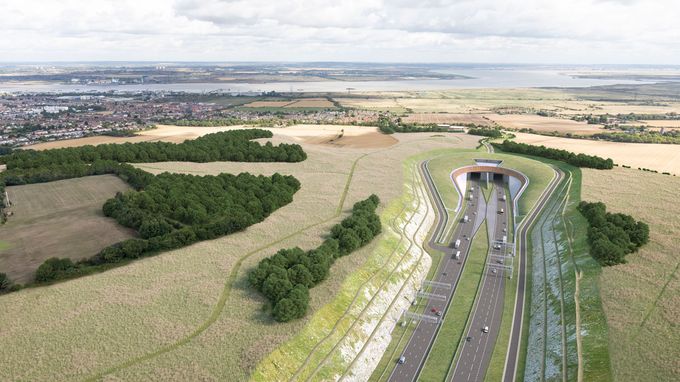
As of January 2026, the Lower Thames Crossing is expected to use the regulated asset base model (credit: National Highways/Joas Souza)
RAB benefits consumers too. Hinkley Point C, still under construction in Somerset to the same design as Sizewell C, has been financed under a contract for difference – a deal based on a guaranteed price for electricity. Its investors carry construction risk and won’t start recouping capital until it’s generating. That’s currently forecast to be between 2029 and 2031, four to six years behind schedule.
Once Sizewell C gets up and running, bills will reduce over time. It’s estimated that consumers could end up paying 15% less for its electricity than that produced by Hinkley Point C.
Several contributors to this report indicated that legislation and/or bespoke regulation will be needed to allow RAB to be applied to other big infrastructure projects. The Nuclear Energy (Financing) Act 2022 paved the way for Sizewell C and future atomic schemes, for instance. Existing transport legislation will be adapted to enable the investment model’s use on the LTC. Bespoke regulation is being developed.
All the same, one expert in this field warned that legislators and regulators may lack the capacity to manage several RAB projects at once, given the number waiting in the pipeline. Without urgent action to expand this “regulatory bandwidth”, the model’s potential to hasten delivery will remain theoretical.
The mutual investment model
The Private Finance Initiative and its successors have proved controversial owing to their perceived cost and inflexibility. In 2018, the then Conservative government announced that it would no longer use the model. But public-private finance has shown some promise in Wales. A variant called the mutual investment model (MIM) was introduced in 2017 on three large projects: the NHS Velindre Cancer Centre in Cardiff (£300m-plus); the Flintshire and Rhondda Cynon Taf schools programmes (£139m); and the Heads of the Valleys Road dualling scheme (£550m).
Private consortia are delivering these projects under 25-year design, build, finance and operate contracts, with payments from the Welsh government on the condition that they meet defined performance standards. The government has a 15% to 20% equity stake in each project.
Mark Drakeford, the Welsh government’s cabinet secretary for finance, confirmed in October 2025 that the MIM was likely to receive ongoing support. He stressed that strong safeguards were in place to ensure accountability and that the model’s performance was aligned with the Wellbeing of Future Generations (Wales) Act 2015, which is designed to promote intergenerational equity. The government shares in project governance.
The Welsh government suggests that MIM has enabled it to mobilise £1.1bn of investment that would otherwise have been unavailable.
Land value capture
The obvious benefits of transport projects – e.g. improving links between areas of housing and centres of employment, retail and entertainment – create opportunities to negotiate investments from landowners and developers.
For instance, there’s a “zone of influence” surrounding a new railway station that will increase the value of real estate within 1.5km of that asset.
“Most such projects have an element of property value uplift, but that’s useful to a transport promoter only if it can be captured and used to support funding,” noted a consultant specialising in this form of project finance.
It’s therefore important to agree contributions from landowners at an early stage, when the project’s likely benefits to them and other stakeholders are clear but before it’s fully funded and there’s still a high degree of uncertainty that it will be delivered.
A well-negotiated deal can capture up to 50% of the growth in land value – significantly higher than other traditional forms of development contribution, such as section 106 contributions and community infrastructure levies.
The ‘zone of influence’ surrounding a new railway station will increase the value of real estate within 1.5km of that asset
Land value capture (LVC) requires diplomatic skill to work with councils, devolved administrations and Whitehall departments including the Ministry for Housing, Communities and Local Government, plus landowners and private investors. The goal is to create an integrated plan in which new rail corridors catalyse sustainable socioeconomic development.
Landowners and developers need to recognise that their contributions to a transport project are vital and see self-interest in supporting its delivery. The 29km Northumberland Line between Newcastle and Ashington is a recent success story (see case study). LVC enabled Northumberland County Council to secure funds that then unlocked further government investment to complete the scheme.
In October 2025 the government announced plans for 12 new towns, following the recommendations of its independent expert advisory panel, the New Towns Taskforce. While experts who contributed to this report view that as a chance to obtain more private funding for infrastructure via LVC, they stressed the importance of clear, early messaging to landowners.
One said: “As soon as a development is agreed, landowners generally assume that its infrastructure will be publicly funded. They’re assured of an uplift in land value and rely on local planning and transport authorities to provide connectivity. But the Northumberland Line has shown that landowners are willing to co-fund infrastructure to create an opportunity when it’s contingent on their doing so.”
Using LVC would help to ensure that vital transport infrastructure is delivered before new towns are built. This contrasts with the situation that has blighted many large greenfield housing developments, where infrastructure provision has lagged home-building, limiting residents’ mobility and causing social exclusion.

The Northumberland Line smashed initial usage forecasts after resuming public services in 2024 (credit: Northumberland County Council)
4. Making the most of digital technology and data
“A big concern is the limited level of understanding, right across the industry, of current digital capabilities, how technologies and skills can fit together in the future and how to create value out of digital.”
This view, from a senior civil servant, summed up a roundtable discussion convened last year by the ICE and software firm Bluebeam. It was echoed by many contributors to this report.
There is widespread frustration at the lack of industry standards, common approaches or platforms for managing and sharing data.
One expert lamented the “wasteful duplication of effort” they have witnessed regularly on one current megaproject.
“The same surveys are repeated by different companies – and sometimes even the same team when there’s a personnel change – because they either don’t have access to the results or don’t trust the data they’re given. That waste could be eliminated if there were strong protocols for assuring data quality and establishing trust.”
‘A massive mess’
One interviewee described the development of digital and data solutions to date as a “cottage industry” in which advances are being driven by competing tech firms; consultants seeking to sell differentiated services; and groups of fervent volunteers. The contributions they make are all valuable, but they’re fragmented – “a massive mess”.
Data strategy is led by clients. Each has its own corporate strategy and often develops a unique strategy for each project. Their legal teams often reply to requests to share data with “a flat ‘no’”.
“We’ve failed to tackle building-block issues such as data-sharing and interoperability. If we don’t deal with that, we won’t make headway,” warned another interviewee.
The broad view is that a unified, common approach to digitalisation and data-handling would benefit everyone – and that the government is best placed to lead on this.
Some foundations have been laid. Established in 2024, the Information Management Initiative (IMI) provides a set of principles for data interoperability with procurement templates and model clauses, guidance for government clients and a glossary. The IMI is led by the Construction Leadership Council (a government collaboration with industry) and supported by Nima, formerly the UK BIM Alliance.
Meanwhile, buildingSMART International and the Open Geospatial Consortium are advancing open standards, focused respectively on building information modelling (BIM) and geographic information systems (GIS). The pair are working to integrate BIM and GIS for smarter, more interoperable infrastructure. In 2024, they published a strategy for enabling the seamless exchange of data across infrastructure, environmental and urban planning domains.
Such initiatives need strong support from a fully engaged industry if they’re to make significant headway.
We’ve failed to tackle building-block issues such as data-sharing and interoperability. If we don’t deal with that, we won’t make headway
Collective effort
It makes sense for the government to play a leading role in the sector’s digital transformation, given that this imperative is writ large in its infrastructure strategy.
NISTA intends to develop digital spatial plans of UK infrastructure, advance a national digital twin programme and support the wider uptake of industrial construction methods to which digital tech is integral.
The Department for Science, Innovation and Technology has already sponsored and guided the development of a platform – the National Underground Asset Register (NUAR) – that shows how organisation- and sector-spanning data management can be achieved (see case study).
The register is built on an international standard developed by the Open Geospatial Consortium called the Model for Underground Data Definition and Integration. The team behind it sees no practical barriers to including other types of asset data. This would potentially expand NUAR to become a national asset register.
The industry can help itself here. Digital specialists interviewed for this report would urge large clients, technology vendors and the government to cooperate on creating interoperability and data-sharing standards. Some called for data-sharing to be written into future contracts, while others said that data management should be aligned with the 2018 Gemini Principles, which set out the basic requirements for creating digital twins.
Red alert: asset management
It is important to note that, while many organisations are focused on the capital programme ahead, asset management remains a serious challenge.
In several areas, particularly the council-run roads network and water sector, the deterioration of ageing assets is jeopardising operational continuity and even public safety. Deferring investment in asset management is a false economy, interviewees warned. The bill for replacement will far exceed that for effective maintenance – and it’s rising fast.
Their warning amplifies the one reported in State of the Nation 2025: many organisations have entered an asset management emergency. They’re heading towards the point at which dramatic changes in condition, performance and remedial cost are inevitable.
The 10-year infrastructure strategy recognises this maintenance challenge with plans to address it. In the water sector, the Cunliffe review focused on asset health, while Ofwat’s asset health roadmap is due to publish initial findings on potential extra maintenance funding in December 2026. This is encouraging water companies to gather more data on current asset health to inform future investment plans.

Teston’s much-repaired medieval bridge in Kent. Many other old assets urgently need similar care (credit: iStock/Howard_M)
But a tension remains, with key renewal and enhancement schemes searching for resources alongside less politically attractive maintenance projects. There is a skills angle too: engineers of the future need to be adept at project delivery and maintenance, while thinking at a system level – e.g. about the potential impact of cascading asset failures across several infrastructure networks.
This upkeep challenge is explored further in the Transport section below.

Analysis
Transport: a road network in dangerous disrepair
The accelerating decline of transport assets nationwide – particularly local roads – is raising serious safety concerns. Does the 10-year infrastructure strategy devote enough resources to fixing them?
Last year’s State of the Nation report asked: “How should professionals communicate when it’s not the case that a structure is ‘going to fall down tomorrow’ but has changed from being acceptably safe to unacceptably safe?”
One of its expert contributors warned: “Parts of the network are perhaps not as safe as the public thinks, while some structures should have usage restrictions on them but don’t.”
Research for this year’s report reveals that such concerns have become even more serious.
Asset deterioration is a pressing problem in all transport sectors, but that’s especially true in the case of the council-controlled local road network, where decades of underinvestment in maintenance have led to an alarming situation.
Valued at £400bn, the local authority road network is about 282,000km long. It makes up 92% of the UK’s total road length and is used for roughly 70% of all journeys.
Council engineers have been warning of its “managed decline” since at least the 1980s. Underfunding has created a vast inventory of bridges, tunnels, retaining walls, cuttings, embankments, culverts, road surfaces, pathways and lighting columns that is failing to meet expected performance standards. An unknown proportion is potentially unsafe or close to failure. And, given that local roads are often used as convenient routes for utilities infrastructure such as water mains, damage to them can cause far wider problems.

In 2025 the government set aside an extra £1bn to repair “broken bridges, ruined roads and tired tunnels” (credit iStock/Tosh Lubek)
The decline is accelerating, according to the Association of Directors of Environment, Economy, Planning and Transport (ADEPT) engineering board. Assets that have remained serviceable despite their neglect are reaching a critical point, under pressure from increasing traffic volumes and vehicle weights as well as the impacts of climate change.
The cost of bringing the local road network back up to standard has been estimated at £50bn. This maintenance backlog can be tackled only by making improvements in the following areas:
- Funding and planning. The short-termism of budget allocations makes strategic asset management nigh-on impossible. A minimum five-year funding cycle with a planning horizon of at least a decade would enable a risk-based, prioritised approach, giving better value for money in the longer term. Also, funds are allocated based on road length, regardless of intensity of use and environmental factors. Many engineers would like to see the return of condition-based allocations, which were used until 2019.
- Staffing. Highway authority engineering teams have been pared to the bone, leaving them short of vital skills. This problem was highlighted in a safety report published last year by Collaborative Reporting for Safer Structures (CROSS-UK): a highway authority had appointed someone without appropriate qualifications or experience to perform inspections, structural assessments and reviews. This is thought not to be a unique occurrence.
- Standards. Transport authorities nationwide are using different recording and scoring systems in various combinations. A more uniform approach would improve visibility of maintenance issues and help engineers to form a shared understanding of these. Experts have also noted that the Design Manual for Roads and Bridges, the UK’s primary set of technical standards and guidance, is geared towards the strategic road network rather than local highways.
- Record-keeping. Many local authorities lack the resources to accurately record all the highways assets across their networks. Several still keep such information on paper only and often miss inspections. An annual variation of more than 2,000 in the reported number of council-owned road bridges – nearly 3% – indicates a poor grasp on essential detail, according to ADEPT.
- Regulatory oversight. Unlike the strategic road network and the rail and aviation sectors, local authority roads don’t have a regulator. Regulatory oversight demands evidence, forcing owners to gauge the condition of their assets and report on it. Having this for local roads would present a difficult, but ultimately welcome, challenge.
For many council highways teams, several of the above issues are barriers to digitalisation and data-informed asset management. Experts across the transport sector have reported that inadequate funding to collect and store data, use effective asset management systems and employ people to operate these is a common problem.

Estimated value of the UK’s local authority road network
Source: Asphalt Industry Alliance

Percentage of the UK’s total road length covered by the local network
Source: Department for Transport

Estimated cost of restoring local roads to a serviceable standard
Source: ADEPT
A deteriorating problem
Beyond the local authority roads network, the declining condition of infrastructure assets is a growing challenge for National Highways, Network Rail and big airports.
Some organisations have been tackling it head on. For instance, National Highways is focusing less on adding to its strategic road network and more on asset renewal in its third road investment strategy (RIS3, covering 2025-30).
Still, the wider expert consensus is that asset management is still not a high priority for most management teams. There is also a widespread fear of exposing just how grave the situation is becoming.

London St Pancras Highspeed has been developing a 40-year asset management plan (credit: iStock/coldsnowstorm)
One interviewee admitted: “No one wants to have to explain why things are as bad as they are. Issue avoidance has created a situation that’s becoming dangerous, with a rising number of precursor events and asset closures.”
Precursor events are observed defects in a structure or “near miss” incidents that are warning signs of a more serious failure to come.
It’s a dangerous yet largely hidden problem. The organisations concerned and the government must recognise the safety risk and find the resources to tackle it effectively.
The power of collective procurement
Several contributors to this report suggested that local authorities should collaborate to aggregate demand. This was also recommended by the Local Government Association (LGA) in a 2025 update to its national procurement strategy.
The association argues that collective procurement can unlock economies of scale, reduce duplication and strengthen supplier relationships. By cooperating, councils can align technical standards and contract terms, making it easier for suppliers to bid and deliver consistently. This reduces the inefficiencies caused where each authority operates a separate framework with different criteria.
Collective procurement is framed as a way to stimulate innovation and give suppliers confidence to invest in capacity. Larger, aggregated contracts are seen as more attractive to the market, encouraging strategic partnerships rather than transactional relationships.

Collective procurement offers several potential advantages for councils that can club together (credit: iStock/jacoblund)
The LGA strategy acknowledges that collaboration requires robust governance structures to balance local accountability with shared decision-making. It suggests that councils use joint committees, shared services or regional alliances to manage collective procurement effectively. Funding constraints are a barrier. But, if this can be overcome, collective procurement could create the conditions for National Highways to act as a “knowledge hub” and share its asset management expertise with local authorities.
No-build or new-build
Delivering new assets won’t always be the best way to achieve the 10-year infrastructure strategy’s desired socioeconomic and environmental outcomes. While the government does acknowledge the strategic importance of asset management, the funding allocated to maintenance is dwarfed by the total devoted to capital projects (see “Finding the maintenance money” panel below).
The National Engineering Policy Centre, a partnership of 43 engineering bodies (including the ICE) led by the Royal Academy of Engineering, recently made the case for greater investment in proactive asset management. In December 2025 it published a paper citing studies showing that every £1 spent now on preventive maintenance will save between £5 and £10 on dealing with future deterioration, while also aiding decarbonisation efforts. Taking care of what we have, the paper argues, is not a cost but an investment in resilience and prosperity.
Some interviewees for this report pointed out that industry culture and self-identity are critical challenges – civil engineering and infrastructure are widely viewed as parts of “the construction industry”. They noted that consulting and contracting firms are persistent advocates for large new-build projects, adding that redirecting some of that energy towards asset management would help to “grow the market”.
The ICE’s forthcoming PAS 3090 standard will provide a guidance framework for asset owners such as highways authorities to make their infrastructure more resilient against different climate change scenarios.
Finding the maintenance money
The 10-year infrastructure strategy allocates £24bn to National Highways and councils for road maintenance. This is welcome, but far short of what’s needed to meet current, let alone future, needs.
The highways authorities in Wales, Scotland and Northern Ireland aren’t covered by this strategy, but have fared little better with their own maintenance allocations. (NB: no fixed percentage of public revenue is allotted to road upkeep – VED and fuel duty are not ring-fenced for this, remaining part of general taxation.)
During the research for this report, a handful of council highways engineers suggested that a form of regulated asset base funding (RAB) should be explored. RAB is a model under which investors finance infrastructure and receive regulated returns through charges paid by users. It would involve direct or shadow tolling.
This idea is in no way outlandish. There are 18 toll bridges and tunnels plus the M6 Toll motorway in the UK, while 14 towns and cities operate congestion and emission charges (although revenues are channelled into public transport rather than road maintenance).
In its November 2025 budget, the government announced a road usage charge (eVED) of 3p per mile for electric vehicles (1.5p for plug-in hybrids), starting in April 2028, with the aim of offsetting falling revenue from fuel duty as drivers switch from petrol and diesel vehicles. Like fuel duty, the income from this is intended for general use, but the formula could be tweaked – and the charge increased – to secure a portion for maintenance.
As asset deterioration poses ever-greater safety risks, the issue of properly funding road maintenance will become an unavoidable discussion. The forthcoming eVED scheme is a starting point. To gain public support, the government should build on this with a clear explanation of the benefits.
Recommendation: the government should build on its eVED plans by introducing a national road usage charging scheme, ring-fencing the proceeds from this for highway maintenance. This would help to offset declining fuel duty revenues, encourage reductions in car use and provide much-needed sustainable funding for the upkeep of roads.

Transport case studies
Make do and mend
This section covers various ways in which infrastructure owners are better managing their assets. These include using advanced digital tech, applying innovative funding models and working with third parties towards complementary goals
In-depth data-sharing: National Underground Asset Register
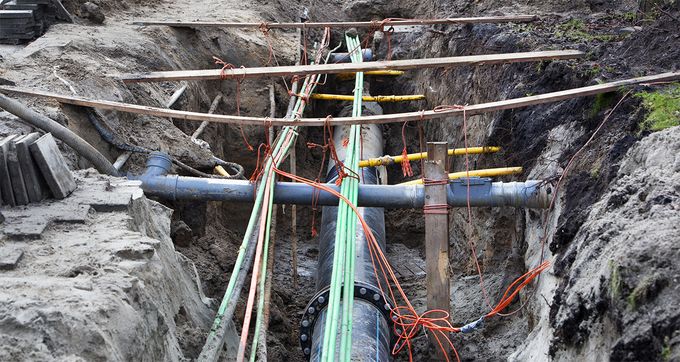
It’s been estimated that there are 60,000 accidental strikes a year on underground assets in the UK (credit: iStock/Peter de Kievith)
Across the UK there are about 4 million km of buried utility pipes and cables, many of which run underneath highways. Information on these assets is held by about 600 entities. Data must be gathered from any that may be affected whenever streetworks are planned. This material will include what’s present, its depth and, ideally, its size, composition and condition. Accessing it takes six working days on average. Providing information to different requesters involves a huge duplication of effort.
Yet there are still about 60,000 accidental strikes on pipes and cables annually, costing an estimated £2.4bn in repairs and disrupting essential services to homes and businesses.
The National Underground Asset Register (NUAR) was created to reduce the strike rate by providing better information about these subterranean assets. It originates from a project started in 2017 by Northumbrian Water, Sunderland City Council and Ordnance Survey, the national mapping agency. Northumbrian suggested that there simply had to be a better way to manage such information.
This collaboration provided proof of concept in 2018, prompting the Geospatial Commission – now part of the Government Digital Service (GDS) – to start work that led to specifications for a first platform build in 2021. In 2025, NUAR entered a public beta-testing phase and Ordnance Survey was appointed as NUAR’s operator. By the end of the year, NUAR was fully operational, holding information on more than 3 million km of buried services. This represented data from more than 300 asset owners, including all major gas, electricity and water companies, plus several telecommunications firms.
The register has cut the time taken to access information from six working days to about a minute. Its mapping features enable users to confirm almost instantly which asset owners are covered in their area of interest.
The Data (Use and Access) Act 2025 took effect in June last year, paving the way for NUAR to become a statutory register. Once secondary legislation is enacted, asset owners will be legally required to upload data. Until 2030, the GDS is covering the cost of doing so.
Users’ first impressions of the register
Early-adopting councils and utility firms have welcomed NUAR’s arrival. They’ve found it intuitive, with staff able to familiarise themselves with the system within 30 minutes of first using it. Adding data is as simple as dragging and dropping files into its portal.
For councils undertaking major streetworks, or indeed any organisation planning excavations, the benefits are knowing what utilities and structures are in the way and whom to contact to discuss how best to protect them. Knowing their position enables more accurate designs, too, requiring less onsite adaptation.
NUAR allows for detailed data about subsurface structures and materials to be included – e.g. whether the ground is rich in sand or clay. Ground characterisation can help engineers to focus their investigations, choose the most appropriate methods and minimise the associated risks.
Durham County Council is looking to combine NUAR data with British Geological Survey data on ground conditions including soil composition, pH and stability. These factors influence the rate at which different materials deteriorate and can therefore inform the authority’s asset management plans.
The authority is using NUAR to check that work by permit-holders conforms to submitted plans and relevant standards, as well as to promote collaboration between companies.

NUAR holds information on more than 3 million km of subterranean assets (credit: Department for Science, Innovation and Technology)
When one utility provider is planning streetworks, for instance, other organisations with assets under the road in question are invited to synchronise any planned works to reduce the need for excavations. The authority rewards effective coordination by waiving lane rental costs.
In Sunderland, where the NUAR concept took root, the council is digitally transforming its operations under the Smart City of Sunderland initiative. In partnership with fibre provider Building Networks, it has laid cable to develop 37 “digital hubs” providing super-fast broadband services, with the goal of attracting investment, developing a cutting-edge tech sector and aiding the introduction of autonomous vehicles.
Many more kilometres of cable will be laid in Sunderland over the coming 20 years and NUAR is helping the partnership to plan connections according to commercial demand. The council is also using the register to plan a heat network that would span the city centre.
- For further innovative thinking on how to manage underground assets, discover the work of the University of Birmingham’s National Buried Infrastructure Facility.
Data-led asset renewal: National Highways

National Highways is building a 15-year asset management plan that puts renewals into four categories (credit: iStock/Bardhok Ndoji)
For National Highways, 2015 marked a turning point. That year, its funding allocations changed from annual to five-yearly, enabling the non-departmental public body to move from largely reactive repairs to purposeful, strategic investments.
Although National Highways’ first five-year road investment strategy (RIS1) focused on new infrastructure, further priorities soon emerged over that period. These included reducing congestion and managing the obvious ageing of assets.
The priority given to the building of new roads was incompatible with a net zero future, while widening existing ones had proved not to solve congestion. At the same time, asset deterioration was causing delays and, in some cases, serious safety risks – and the growth of social media was giving disgruntled road users new public platforms to vent their frustrations.
As a consequence, National Highways shifted its attention to asset renewal in RIS2, which covered 2020-25. Moving into the new RIS3 period, it has increased its renewal budget by 60%. Importantly, this fund cannot be used to cover cost overruns on capital investment projects.
National Highways is building a 15-year asset management plan and wants to extend that horizon further. The plan puts renewals into four categories: predictive and routine; preventive; significant (critical for safety or keeping the strategic road network moving); and special (situations requiring enhanced monitoring).
Data is key to demonstrating the need for funding and targeting priority renewals. It’s also becoming increasingly important in proving that investments in asset management are providing value for money. Smart technology – e.g. sensors both on structures and in vehicles – is efficient at harvesting large amounts of road data. While still relatively scant in both quantity and quality, the data that National Highways possesses is vastly better than it was in 2015, when there was next to none. The organisation is pushing to improve this situation further in RIS3.
The added benefits of long-termism
The introduction of five-year settlements has also enabled National Highways to transform its relationship with the supply chain. Greater certainty has enabled it to set longer-term goals and incentivise suppliers to become more dependable.
National Highways has also been able to set key performance indicators, with targets and rewards for surpassing these. Suppliers that performed strongly in the run-up to RIS3 won preferred status.
As with capital delivery programmes, supplier continuity is beneficial. In the same way that consultants and contractors improve construction processes as they learn together, they also gain expertise in asset management, familiarising themselves with structures, their common problems and how to solve them.
National Highways credits an “open and non-confrontational relationship” with its regulator, the Office of Rail and Road, for aiding the shift towards asset management. The organisations can have frank conversations about issues of concern with a clear understanding of their roles and responsibilities.
It also stresses the importance of clear and proactive communication with the public. As more disruptive renewals become vital, the best way to mollify road users is to warn them well in advance. Doing this in 2025, before major works on the M6 and M25, had a marked impact on the behaviour of drivers, with many accommodating predictably slower journey times, some making detours – and a significant proportion choosing not to travel.
Innovative finance: the Northumberland Line

The Northumberland Line applied the land value capture model of attracting private investment (credit: Northumberland County Council)
The Northumberland Line has been hailed as a landmark rail revival project, brought to completion faster and more cost-effectively than several comparable schemes across the UK. Its pioneering investment model can take at least some of the credit for this.
Passenger services on this 29km line – once a vital route for coal and the community – ended in the 1960s as part of the Beeching cuts. Roads to towns including Ashington, Bedlington and Blyth became congested. Longer travel times by car, along with poor bus services, narrowed locals’ access to economic and social opportunities in Newcastle and beyond. Deprivation set in.
The situation started improving in 2021 when Northumberland County Council, backed by the Department for Transport, proposed to reopen the line to passengers. With six new stations, the route would reduce car dependency in the area and improve people’s employment prospects. Despite this, public investment fell about one-third short of what was needed.
Recognising the likely uplift in property values that would result from reopening the line, the council engaged E-Rail, a specialist in obtaining private finance for public transport projects. E-Rail had developed a model that aligned infrastructure investment with private sector benefit. The Northumberland Line offered a compelling test case: it would serve a corridor with development potential and communities eager for reconnection.
After testing the applicability of E-Rail’s model, the council commissioned the firm to negotiate with landowners and developers on its behalf.
The model is based on a principle known as equitable contribution. E-Rail identified and approached entities in the area whose real estate would appreciate if rail services were restored. It negotiated voluntary contributions from these beneficiaries, structured as one-off payments or phased commitments. These are not levies, but contractually agreed sums based on the projected growth in property value.
Crucially, this approach did not involve compulsory acquisitions or legislative changes, relying instead on transparent benefit-sharing and local goodwill. It enabled the project to obtain more than a quarter of the investment it needed from private sources, unlocking wider government grant funding thereafter.
The line entered operation in 2024, with the final station at Northumberland Park due to open at the end of March 2026. The stations are no-frills affairs, but there is provision for enhancing them as land development increases, communities develop and demand grows.
Digital-twin asset monitoring: Chetwynd Bridge

A structure has been designed that would enable the historic Chetwynd Bridge to be retired from carrying motor vehicles (credit: R Cragg/PHEW)
Staffordshire County Council’s highways team manages 1,000-plus “significant bridges”, 3,900 bridges on public rights of way and 200km of retaining walls. These assets are worth an estimated £2bn, but they’re depreciating by more than £20m a year because of a lack of maintenance funding. The council’s annual budget for highway bridges is £6m. Meanwhile, traffic on the county’s roads is getting heavier.
Staffordshire’s grade II* listed Chetwynd Bridge epitomises the problem. It carries a strategic route, the A513, over the River Tame near Alrewas.
Those familiar with Thomas Telford’s Iron Bridge in neighbouring Shropshire will recognise their shared heritage: Chetwynd Bridge was made at the same foundry in 1824.
After 200-plus years in service, this cast-iron structure has a long list of defects. It had been strengthened in the 19th and 20th centuries, but a weight limit of 7.5t was imposed when the bridge was refurbished again in 2021, obliging large vehicles to make lengthy detours. Historic England won’t permit further alterations to it.
Increasingly concerned about the bridge’s structural integrity, the council is using digital twin technology to monitor its condition. This has 60 sensors giving real-time temperature, loading and deflection readings.
The digital twin clearly shows that a replacement is needed. The council has formed a plan with Amey Consulting that proposes a new crossing to bypass the structure, which would be left to carry pedestrians and cyclists. The council has self-funded the design work in hope of securing support from the Department for Transport. About £30m would be needed.
The key question is, which will come first: the funding or the bridge’s enforced closure for safety reasons?
Collaborating for co-benefits: Network Rail’s flood risk pact
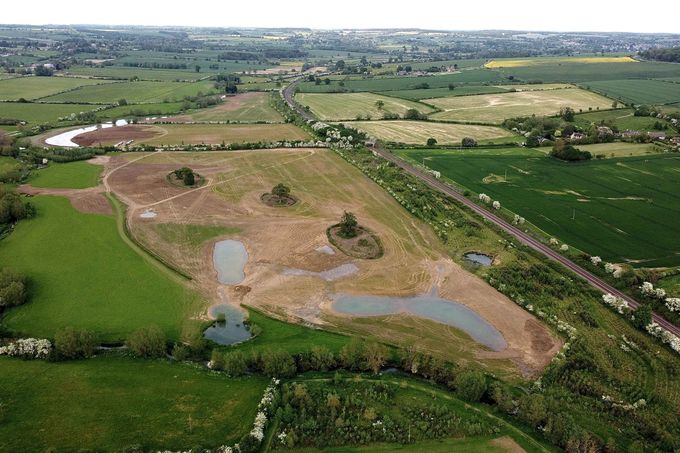
Phase one of the project showed that slowing and spreading water flow reduced the erosion risk to embankments (credit: AtkinsRéalis)
A collective of more than 60 farmers in the Cotswolds is helping Network Rail to solve a chronic and potentially worsening embankment erosion problem. The Cotswold Line runs mostly alongside the River Evenlode between Oxford and Moreton-in-Marsh, crossing this flood-prone Thames tributary 27 times. There is a long history of embankment washouts on this stretch – and climate modelling has shown that the risk will increase without urgent remedial action. But an alliance between the infrastructure owner and those who own and work the neighbouring land is reducing the likelihood of future incidents.
Plans to change water management in the valley started with the farmers, who were concerned about soil erosion and fertiliser run-off. They ran a rewilding programme that reintroduced meanders to the artificially straightened river, softened its banks and created “scoops” in the landscape where floodwater could be safely contained.
In the past five years, that initiative has evolved into the Evenlode Landscape Recovery project, hosted by the North East Cotswold Farmer Cluster and funded by the Department for Environment, Food and Rural Affairs.
Round one of this project is expanding the principles of the initial trial to an area of 3,500ha, restoring grassland, wetland and woodland on the floodplain. This in turn is increasing biodiversity, sequestering carbon, improving water quality, providing floodwater storage and, crucially, reducing the erosion risk to railway embankments.
Drawing on the experience, Network Rail is forming a business case to invest in nature-based solutions on third-party land as part of its asset management strategy. It’s doing so in collaboration with the farmer cluster, AtkinsRéalis and Great Yellow, a specialist in financing nature restoration schemes.
International focus: AI-aided road monitoring in Hawaii

Hawaii’s dashcam-based assessment system has drastically reduced the need for in-person highway inspections (credit: iStock/CLphoto)
In November 2025, the Hawaii Department of Transportation (HDOT) gave away 1,000 dashcams to vehicle owners on the island state.
Recording and thereby deterring reckless driving – a bigger problem here than it is elsewhere in the US – was only part of the reason for the handout. Since 2022, HDOT has been using images captured by high-resolution dashcams to assess the condition of Hawaii’s roads, identify safety risks and prioritise repairs. After a three-year trial, this system is being expanded.
HDOT’s digitally assisted approach to asset management uses image analysis and visualisation software provided by Blyncsy, part of Bentley Systems. The software, also named Blyncsy, has AI that’s been trained to scan dashcam footage and identify features such as road markings and signs, construction barrels (more robust versions of traffic cones), debris, surface defects and roadside vegetation.
Blyncsy rates the condition of surfaces on a scale of one (failed) to 10 (excellent) and assigns severity levels to any hazards it detects, enabling HDOT to target its maintenance efforts accordingly. As fresh footage comes in, Blyncsy instantly analyses the images and updates its records, flagging up defects with GPS and time-stamp data.
While this system hasn’t removed the need for in-person inspections, it has reduced the number required by about 95%. It has also solved some of the common problems that highways authorities face: drivers will rarely report road defects, typically assuming that others have done so or that highways teams already know about them, for instance. And repair crews often miss the defects assigned to them, mistakenly fixing less serious flaws nearby. With the benefit of dashcam images, HDOT can quickly check that the correct works are in progress.
In 2024, the department estimated that its use of Blyncsy had delivered annual savings approaching $1m (£750,000), including reductions in the costs of manual inspections, data entry and condition assessment. That figure doesn’t even account for how this proactive new approach has reduced the asset depreciation rate that HDOT’s previous maintenance regime had allowed.

Analysis
Energy: can the UK become a low-carbon ‘superpower’?
The nation’s clean energy future depends on a huge expansion of solar, wind and nuclear capacity, plus grid upgrades. Advances are urgently needed on several fronts
According to its 10-year infrastructure strategy, “the government’s mission is to make the UK a clean energy superpower”. It wants this not only to cut national CO2 emissions but also to strengthen energy security by reducing the country’s reliance on imports. To this end, it has set the following goals:
- Add 43GW to 50GW of offshore wind, 27GW to 29GW of onshore wind and 45GW to 47GW of solar generation by 2030, with unabated gas (accounting for less than 5% of the generation mix) providing flexibility.
- Invest £9.4bn in carbon capture, utilisation and storage (CCUS) and hydrogen production.
- Progress new atomic projects, starting construction on the 3.2GW Sizewell C plant in Suffolk; bringing small modular reactor technology to market (the first reactor will be built at the Wylfa site on Anglesey); and devoting £2.9bn to nuclear fusion research.
- Invest £13.2bn in improving the energy efficiency of buildings with the aid of heat pumps, insulation, solar panels and batteries.
- Decarbonise transport.
- Shift from landfill and incineration to generating energy from waste with CCUS.
Peak electricity demand in the UK is projected to increase from about 60GW in 2024 to at least 105GW by 2050. Total energy demand is expected to decline over this period – by as much as 25%, according to some forecasters – because we will have a more efficient energy system compared with one based on fossil fuels. Yet there is no doubt that these trends will place substantial extra demands on the grid.
The UK, Scottish and Welsh governments jointly commissioned the National Energy System Operator (NESO) to produce a national strategic spatial energy plan. Set to be published this year, it will state the locations and quantities of generation and storage infrastructure required to meet the needs of the system from 2030 to 2050.
NESO will then publish a centralised strategic network plan, setting out the network infrastructure needed to connect generation, storage and demand to the grid. The operator is also delivering strategic plans that will set out the energy requirements for each region and identify investment needs.

The government is seeking to add at least 27GW of onshore wind and 45GW of solar generation by 2030 (credit: iStock/LoveSilhouette)
The energy experts who contributed to this report were particularly concerned about the short-term challenges of completing the Hinkley Point C nuclear plant, mobilising to build Sizewell C efficiently and delivering the Great Grid Upgrade. The following figures show why:
- Hinkley Point C, delivering two 1,630MW European pressurised reactors (EPRs) at a forecast final cost of £46bn. For its projected completion in 2031, this will require a peak workforce of 15,000.
- Sizewell C, delivering two 1,630MW EPRs at a forecast final cost of £38bn. For its projected completion in the mid- to late 2030s, this will require a peak workforce of 10,000.
- The Great Grid Upgrade, delivering 15 transmission projects (including lines and substations) at a forecast final cost of £60bn. For its projected completion in the early 2030s, this will require a peak workforce of 50,000.
Each of these projects presents an extraordinary logistical challenge on its own – and they’re all taking place in a sector that’s set to become superheated.
This situation is unlikely to change once they’re completed, with the nation’s demand for construction resources likely to become even greater in the 2040s.

Forecast minimum rise in UK peak demand for electricity in 2024-50
Source: National Grid

Projected completion date of Hinkley Point C, roughly six years late
Source: EDF Energy

Westminster’s total commitment to nuclear fusion research in 2025
Source: Department for Energy Security and Net Zero
Tidal range power remains on the fringes
Last year’s State of the Nation report asked whether tidal range power might become key to the UK’s clean energy future, as Labour’s election manifesto had been positive about the idea. The ICE’s Autumn Prestige Debate also explored the topic in depth.
Many observers believed that the possibility of developing tidal range energy projects had ended in 2018 when the Conservative government refused funding for a planned lagoon-based power station in Swansea Bay. But proponents of the technology clung to hope and continue to promote larger tidal barrier schemes across the Severn estuary and other potential sites.
Western Gateway, an alliance of 28 local authorities, set up a commission to assess with fresh eyes the potential of a range of sites along the Severn estuary and reappraise the Swansea Bay scheme. And the devolved Liverpool City Region Combined Authority used its relative independence from Westminster to develop plans for the construction of a 1GW barrage on the Mersey that, it says, could start as soon as 2028.

An artist’s rendering of the proposed 1GW tidal range power station on the Mersey (credit: Liverpool City Region Combined Authority)
In October 2025, NESO didn’t give either organisation much encouragement. Its Strategic Case for Tidal Range concluded that “when the total cost to the consumer is considered… the scenario where no tidal range is included is the cheapest”.
In other words, building a lagoon- or barrage-based power station is an expensive choice – in the short term, at least – compared with more conventional wind and solar options.
NESO’s report did at least recommend exploring alternative funding mechanisms for the technology, including the regulated asset base model. It also suggested a closer examination of where tidal range projects might be developed to maximise their potential benefits. These include predictability of supply – a valuable advantage, improving grid stability, that wind and solar simply cannot match.
The Severn and Mersey tidal range plans haven’t been fatally holed, then, but the strategic case for them seems far from watertight.
A skills opportunity for the fossil fuel workforce?
The UK’s transition to low-carbon energy presents an opportunity to retrain and redeploy the nation’s oil and gas workers.
About 120,000 people are employed directly or indirectly by the UK oil and gas sector. They include 26,000 working upstream in extraction and supply, and 23,500 in gas distribution. Many of these employees have highly transferable technical skills that the nation risks losing in its move away from fossil fuels.
These skills could be refocused on emerging areas of need in the low-carbon energy sector. For example, workers from the upstream oil and gas industry could move into offshore wind, where their knowledge of maritime operations, project management and asset maintenance would be most relevant. Meanwhile, gas network engineers could move into areas such as installing heat pumps or building hydrogen infrastructure.
Reskilling the oil and gas workforce could support a “just transition” and retain expertise in communities that might otherwise suffer a brain drain. But realising this opportunity will require coordinated action in the form of clear policy signals, investment in training, financial support for workers and collaboration between industry and further education.

Energy case studies
Teamwork makes electric dreams work
This section focuses on diverse efforts to future-proof national energy infrastructure that have a key common factor: the need for effective collaboration to achieve vital outcomes
Creating capacity: Sizewell C

An artist’s rendering of the Sizewell C nuclear power station, which could be generating electricity within 10 years (credit: Sizewell C)
Preparations for building Sizewell C atomic power station started long before the project reached financial close in November 2025. Tucked away on the Suffolk coast, the site is more isolated than that of its more advanced sister project, Hinkley Point C, whose motorway links to Bristol, Cardiff and Exeter have eased the problem of mobilising the 15,000-strong workforce it needs. Sizewell is 120km from the nearest motorway junction. The closest town of any size, Ipswich, is home to only about 130,000 people.
Part of the solution has been to plan for a smaller workforce. The procurement team is aiming to employ no more than 10,000 people at peak times. It will use several methods to obtain them.
Sizewell C is planning temporary accommodation for 5,000 workers, some of whom will be hired directly from Hinkley Point C as activities wind down there. It has pledged to create 1,500 apprenticeships and is also planning a recruitment drive targeting local people who are not currently working.
A condition of the planning consent for Sizewell C is that the project creates local opportunities. To this end, it’s building a new sixth-form college at the neighbouring town of Leiston and has entered partnerships with other colleges in the area. These will develop several of the skills that the project needs on its doorstep, equipping college-leavers for well-paid local jobs.
All in it together
Sizewell C appointed contractors Balfour Beatty, Bouygues and Laing O’Rourke – known collectively as the Civil Works Alliance – in June 2025. It’s applying an Australian alliancing model that has proved effective on complex, high-risk projects including the Sydney Metro. This model is characterised by:
- An integrated team structure. The client, designer and constructor form a coalition with a no-blame culture.
- The sharing of risks and rewards among all parties.
- Financial transparency. Costs and margins are visible to all, promoting trust and accountability.
- Joint decision-making. Governance is collaborative, with unanimity required when key choices must be made.
- A “best for project” ethos. The alliance prioritises successful outcomes over individual interests.
The plan is to maximise the use of offsite construction to make the project more efficient than Hinkley C. With this in mind, Sizewell C has purchased the rebar cutting, bending and fabrication process that High Speed 2 used.
The project is also set to use third- and fourth-party logistics (3PL and 4PL) arrangements, which are common in industries such as manufacturing and retail, to handle its vast material requirements. Under 3PL, a provider handles transport, warehousing and distribution for part of the supply chain. With 4PL, a “strategic integrator” oversees the whole supply chain, including several 3PLs.
Securing skills: the Great Grid Partnership
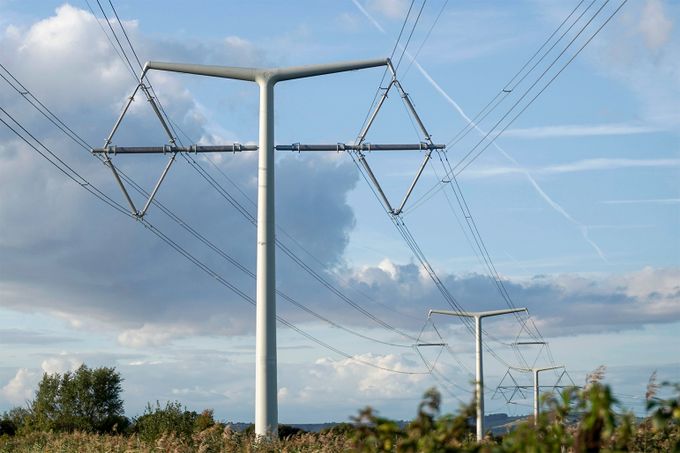
At its peak, the Great Grid Upgrade is expected to need 50,000 workers to deliver a wide range of assets (credit: Shutterstock/Vincent Edgar)
A supply chain initiative called the Great Grid Partnership (GGP) is delivering about £9bn-worth of the £59bn Great Grid Upgrade programme run by National Grid, the owner and operator of electricity transmission infrastructure in England and Wales. This has brought seven strategic partners together to work under an enterprise model.
- Design and consenting: WSP and a joint venture between AECOM and Arup.
- Construction: Laing O’Rourke, Morgan Sindall Infrastructure, Morrison Energy Services, Murphy Group and Omexom-Taylor Woodrow.
The GGP covers nine accelerated strategic transmission projects and will also replace ageing assets such as the Thames Cable Tunnel. Its targeted outcomes include faster, more coordinated delivery; innovations that provide better value for money; and decarbonisation.
National Grid has set up a transmission skills working group featuring 30-plus suppliers. Its role is to prioritise the jobs and skills needed to deliver the upgrade and nudge the industry (and its regulators), education providers and the government towards developing them.
AECOM-Arup and WSP are using a range of measures to secure the workers this programme needs. They’re incentivising people to move from other sectors requiring applicable skills, including road, rail and digital. Using their global scale, these businesses are harnessing talent in different time zones and creating international virtual teams. Exchanges of employees between GGP partners are becoming more common too.
Increasing numbers of apprentices are finding employment with firms on both the design and construction sides of the GGP. Many will be rotated through consultancy and construction to give them a rounded view of the programme, despite the extra admin burden this will impose.
The construction partners have so far focused on building the capacity to erect overhead lines. They will create training centres, not to directly educate the army of workers needed but to equip tutors to deliver those courses.
The GGP is creating a skills passport system that enables people to start working in a tightly limited area and gradually become more versatile by taking on new tasks and becoming proficient in those. As they add “attributes” to their passport, they gain access to more areas of a site.
To perfect this approach to assembling the skills required, the GGP is studying the oil and gas sector, which has a longer record of working that way. It would like to see skills development become an industry-wide requirement, backed by key performance indicators and treated similarly to safety management: both the right thing to do and a statutory obligation.
Boosting efficiency: converter station delivery
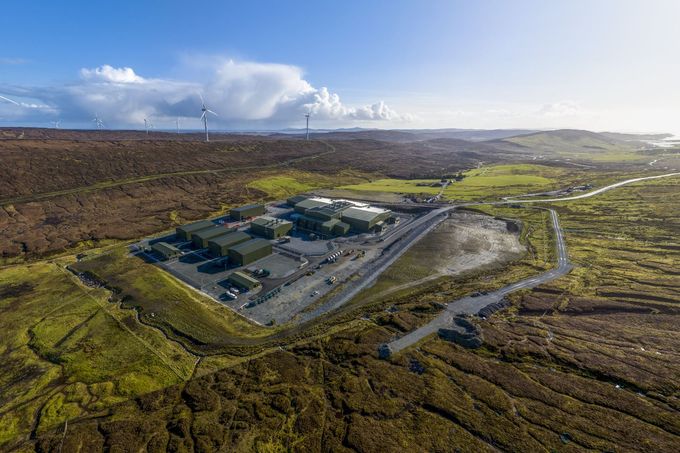
The Kergord converter station is part of a project taking electricity from Shetland to mainland Scotland (credit: SSEN Transmission)
Transmitting electricity large distances from remote wind farms requires alternating current to be converted to direct current and then back again when it’s fed into the distribution network. High-voltage converter stations do this job.
The technology is designed, supplied and installed by original equipment manufacturers (OEMs). They will usually also design and construct the buildings that house converters, along with their associated earthworks, drainage systems, communication links and environmental enhancements.
The problem is that only a few such OEMs exist. The large number of high-voltage transmission projects in progress around the world is stretching not only them but the whole supply chain.
One of the UK’s three grid operators, Scottish & Southern Electricity Networks, is disaggregating civil engineering from equipment supply to mitigate this problem, freeing OEMs up to focus on their specialisms. In 2024, it awarded Mott MacDonald an eight-year framework agreement to develop an employer’s civil design (ECD) for future converter stations.
The ECD is a standardised design that applies offsite and modular techniques to optimise the construction process, while enabling Scottish & Southern Electricity Networks to contract with the manufacturer to do simpler, repeatable work.
Its building and site model substantially reduces front-end engineering and detailed design requirements, while unlocking construction efficiencies that should result in the faster, less resource-intensive delivery of converter stations.
International focus: Australia’s Project EnergyConnect
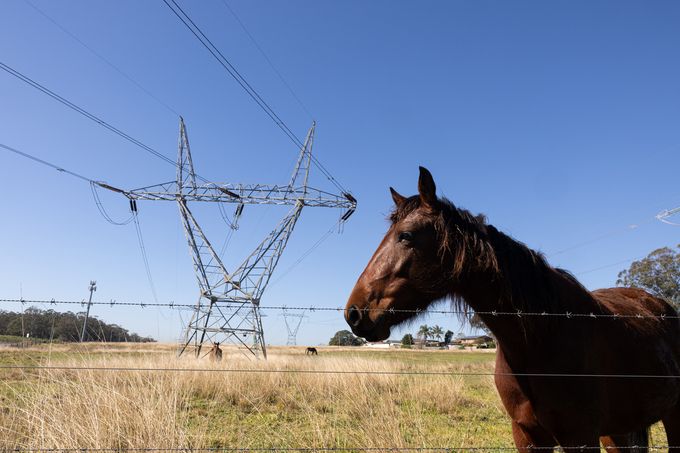
The £1.8bn transmission project is connecting the grids of three states, enabling them to trade electricity (credit: iStock/Kolbz)
Several countries are seeking to meet their future electricity needs by increasing grid capacity, boosting resilience and plugging more renewable energy sources into the network. They include Australia, where the long distances between significant population centres add another level of difficulty to the challenge.
The nation’s largest electricity transmission project, EnergyConnect, entails building 900km of infrastructure across New South Wales, South Australia and Victoria, connecting these states’ grids for the first time.
This will boost energy security and resilience by enabling the three to trade electricity, while connecting more solar and wind arrays to the system.
A partnership between Transgrid and ElectraNet is delivering the A$3.6bn (£1.8bn) project, financed under Australia’s building-block model, which is comparable to the UK’s regulated asset base approach. Consumers will pay for EnergyConnect over five years (2023-28) as approved by the Australian Energy Regulator.
This arrangement was justified by forecasts that the project would put downward pressure on prices. Once fully operational, it’s expected to deliver bill savings of A$127 a year for the average South Australian consumer and anywhere between A$6,000 and A$18,000 for business customers.
The first stage of the project – a 135km line from Robertstown in South Australia to Buronga in New South Wales, with a 24km spur to Red Cliffs in Victoria – was switched on in April 2025. Work on the second stage in New South Wales is expected to finish in 2027.

Analysis
Water: a race against time to build capacity
Reservoir-building has restarted in earnest and other supply-boosting schemes are mooted, yet water insecurity remains a genuine possibility, especially given the UK’s lack of senior-level dam engineering expertise
Last year’s State of the Nation report explored the key priorities of the water sector as demand continues to soar. These include: increasing capacity and reducing leakage; improving the environmental performance of its wastewater operations; and balancing the needs of consumers, including thirsty data centres, with ecological concerns.
Focusing on the capacity-building potential of wastewater recycling and re-use, it noted: “Although using treated wastewater for drinking purposes is technically feasible, some people consider overcoming the so-called yuck factor and gaining acceptance from consumers to be a huge challenge.”
Nonetheless, the report highlighted how recycling initiatives around the world, including in France, Singapore and the US, have successfully reassured the public.
The Hampshire Water Transfer and Water Recycling Project (HWTWRP), which also featured in last year’s report, has yet to win approval from the government. Southern Water says that it has strong public support for the scheme, but won’t know whether it’s convinced the secretary of state for environment, food and rural affairs until mid-2027.
Once submitted, HWTWRP’s application for a development consent order will probably be the first of its type tested under the recently enacted national policy statement for water resources infrastructure. Southern expects that this will mean additional scrutiny, adding risk to the project.
In June 2025, the Environment Agency underlined the problem that HWTWRP could mitigate. The agency’s National Framework for Water Resources noted that England is facing a daily drinking-water deficit of 5 billion litres by 2055 – and “a further 1 billion litres may be needed for use other than public water supply. This includes water for energy security and for food production.”
There is no doubt that society’s attitudes to water consumption and conservation need to change. The average person in the UK uses 150 litres of water a day. It’s estimated that this could be cut to as little as 50 litres with the right combination of policies, water-saving technologies and behavioural changes – a goal promoted by the 50L Home Coalition. Yet even if there is strong progress on this front, population growth and climate change mean that supply-side solutions will be needed.
The Hampshire project is just one of 18 strategic water resourcing options being advanced with support from the Regulators’ Alliance for Progressing Infrastructure Development (RAPID), which comprises the sector’s three watchdogs: Ofwat, the Environment Agency and the Drinking Water Inspectorate.
When combined, these projects would deliver about 1 billion litres extra a day. Water companies have set out plans to find more than 700 million more litres a day through various resourcing options of their own, while nearly 900 million litres should be made available daily through distribution improvements, including leak reduction. Ofwat has set the whole sector the target of cutting leakage to half of 2017’s rate by 2050.
Completing the full RAPID programme will take at least 20 years. But resource scarcity is an urgent problem. Short-term capacity limitations could even hinder the government’s economic growth plans, expert panellists warned in April 2025 when the ICE’s Spring Prestige Debate focused on the UK’s water insecurity.
Several water companies have no headroom left and will be unable to meet the increased demand imposed by the government’s industrial and infrastructure strategies.
Relatively fast capacity improvements could be achieved by harnessing rainwater, grey water and treated wastewater for non-potable uses, which account for about 80% of total consumption. Planning policy might be tweaked to require these features for new builds. Conflicting regulatory priorities and disjointed policies have been cited as barriers to water re-use for non-potable purposes. It’s hoped that regulatory reforms recommended in July 2025 by Sir Jon Cunliffe, chair of the Independent Water Commission, will address this problem.
The technical barriers to adopting recycling and re-use are relatively low. In 2024 the Drinking Water Inspectorate appointed an advisory group to learn from successful projects around the world. It’s due to publish its recommendations and guidance on recycling and re-use this year, including equipment design specifications and treatment standards.
Relatively fast capacity improvements could be achieved by harnessing rainwater, grey water and treated wastewater for non-potable uses, which account for about 80% of total consumption
Pressure on the pipeline
The experts who contributed to this section of State of the Nation 2026 had the same headline concern as their counterparts from the energy sector: the construction industry’s own limited capacity to build all the required assets.
The water sector’s supply chain is already being stretched thin, as its workload over the current regulatory period (2025-30) nearly doubles that of the previous five years. Investment is at a record high and is expected to keep rising until 2040.
Experts are particularly focused on the task of designing and building the UK’s nine planned large reservoirs. The scale of the construction programme is a concern: earthworks contractors are already flat out on current projects, many of which have years yet to run.
Work on Havant Thicket Reservoir in Hampshire started in 2022. It’s a large undertaking, entailing some 3.3 million m3 of earthworks. To provide a sense of scale, the new railway cutting between Barton Hartshorn and Mixbury – HS2’s longest at 4.1km – required a mere 1.3 million m3 of earthworks.
But Havant Thicket will be dwarfed by what’s to come. Anglian Water’s planned reservoirs in Cambridgeshire and Lincolnshire, for instance, are likely to have a storage capacity of around 50 million m3, while Havant Thicket’s is 8.7 million m3.
All of the planned reservoirs are in England, which is significantly more water-stressed than the other UK nations. Nonetheless, regional capacity-building investment is likely to be needed in south-east Wales, where strategic water transfers are being considered. Major supply-boosting schemes aren’t needed in Scotland and Northern Ireland, but both are investing in improving treatment capacity and network resilience.
As with all earthworks-heavy projects, progress on the reservoirs depends greatly on the weather. Slow planning and consent processes, changes of scope, incomplete designs and late approvals can set construction back by years. Delays of this kind can cause projects to miss crucial earthwork seasons – lose the summer and the wet months thereafter will prevent work from restarting until the following spring. It can take several weeks for a construction team to attain full productivity, so stop-start activity is highly inefficient. On top of that, when contractors cannot forge ahead as planned, they tend to redeploy unused resources elsewhere.
For clients and suppliers alike, delays can lead to increased preliminary costs and potential liquidated damages when key contractual dates are missed.
Some interviewees said that they have seen helpful dialogue among clients about design innovation, common approaches and best practice. But they voiced concern about the apparent lack of coordination in terms of scheduling various big projects as they get started. Suppliers said that clients will get the best from them only if they work together to minimise the number of overlapping activities.

Water firms’ targeted reduction on 2017 leakage levels by 2050
Source: Ofwat

Cubic metres of earthworks required by Havant Thicket Reservoir
Source: Future Water

Forecast daily drinking-water deficit in England by 2055
Source: Environment Agency
No substitute for experience
Another concern is skills. The most recent big dam to be built in the UK, at Carsington Water in Derbyshire, was completed back in 1992. Since then, there have been few similar projects enabling large numbers of engineers to gain experience in dam construction.
This shortage of expertise could hold projects back and so push up their costs. In a construction market where high inflation persists, that limiting factor could force the UK into water insecurity, because the extra supply capacity it requires simply cannot be built quickly enough. It also presents a potential danger for the safety of existing structures.

The dam creating Carsington Water had to be remodelled after part of its upstream face failed during construction (credit: iStock/Katie Davies)
Under the Reservoirs Act 1975, it is mandatory in England and Wales to employ a “suitably qualified” engineer to design and supervise construction. Qualified engineers are appointed by the secretary of state for the environment, food and rural affairs, in consultation with the ICE, to one of the following: the all reservoirs panel, the non-impounding reservoirs panel or the service reservoirs panel.
Their members form a select group of seasoned senior engineers that has been dwindling steadily for several years. Between 2010 and 2022, the number of engineers on the all reservoirs panel fell from 42 to 33 – a total that Professor David Balmforth described in his government-commissioned review as “insufficient to meet likely future demand”. This number has since fallen further – to a mere 24 – as of January 2026.
The fundamental role of panel engineers is to ensure dam safety, the main elements being water level management; draw-down of the reservoir; and the integrity of the structure forming the dam. They have a “keystone role” in the new reservoirs programme.
For consistency’s sake, it is desirable that a single panel engineer acts as the “guiding mind” on dam safety from the planning stage to at least three years into its operation, when a final certificate is issued. This will probably be impossible for most of the new dam projects. The youngest members of the all reservoirs panel are in their mid-40s. Most of today’s panel engineers are likely to have retired before the planned projects are finished.
Handovers are complicated by panel engineers’ personal liability for dam safety as well as their employers’ commercial liability. Clients will therefore need to work with their panel engineers to establish clear specifications from the outset, so that any replacement panellist can easily understand why their predecessor made certain key decisions.
It has yet to be determined how the panel engineer’s role will align with RAPID’s preference for design-and-build delivery, given that this model may entail asking the contractor to accept liability for a design over which it wouldn’t have full control.
Panel engineers are also responsible for inspecting existing reservoirs and overseeing critical remedial works. There are about 3,500 dams across the UK. Inspections operate on a 10-year cycle, calling for an average of 350 checks each year (although some structures require more frequent attention).
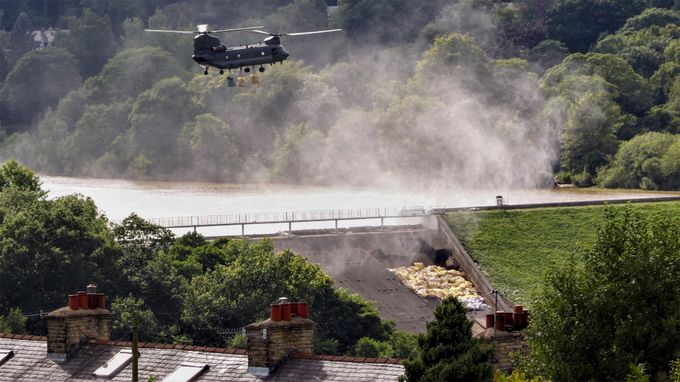
The 2019 Toddbrook Reservoir spillway failure is a reminder not to neglect old assets in the race to build (credit: Shutterstock/Leslie Eckersley)
In England, the threshold reservoir size for registration is currently 25,000m3. This is likely to be reduced to 10,000m3 when the government implements its reservoir safety reform programme in the coming years. Bringing England into line with the rest of the country will add many hundreds of structures to the inspection list.
Developing future panel engineers is a core workstream of the reservoir safety reform programme, but it’s something of a race against time. It’s just as well that a good way to help engineers improve their understanding of dams, join a panel and take responsibility for checking the integrity of existing assets is a sustained programme of new-build reservoir projects.

Water case studies
Digging for victory
This section reveals how two English reservoir-building efforts are progressing – and how one US enterprise is using wastewater recycling to boost supplies in a water-stressed corner of the country
Work in progress: Havant Thicket Reservoir

An artist’s rendering of Havant Thicket Reservoir, viewed from across the nature reserve that will also be created (credit: Portsmouth Water)
The £340m Havant Thicket Reservoir scheme featured prominently in last year’s State of the Nation report, along with the Hampshire Water Transfer and Water Recycling Project (HWTWRP). Portsmouth Water is building the reservoir to meet future increases in demand while reducing abstraction from two ecologically sensitive chalk streams by its strategic partner, Southern Water. On its expected completion in 2031, the reservoir will supply 21 million litres daily.
Southern Water expects to apply for a development consent order for HWTWRP this spring. Were that plan to be approved, adding recycled wastewater to the reservoir would boost daily supplies by a further 90 million litres.
The focus this year is on construction. Havant Thicket Reservoir will cover 160ha, with a 3km impounding embankment reaching a maximum height of 22m. It will feature a clay core with earth shoulders.
It has been 35 years since the previous major reservoir of this type was completed in the UK (Carsington Water), so this project should provide important lessons for the larger ones set to follow it.
Getting the lie of the land
Portsmouth Water bought the site with the intention of building a reservoir in the 1960s. It had therefore developed a good understanding of its geology before the planning stage started. The project team expanded on this to produce a detailed geotechnical baseline report.
The site is underlain mainly by London clay and Reading formations – ideal for water-retaining structures – but there are areas of permeable Bognor sand and Harwich formation. Where the embankment crosses these, cut-off walls will be required to prevent seepage.
Ground investigations have revealed several shear surfaces between materials. These have been excavated to enable further analysis.
The main embankment’s design and construction plans have been informed by a 140m-long trial section built by main contractor Future Water in 2022. An array of inclinometers, pressure gauges, piezometers and settlement gauges measured the structure’s performance over six months. Future Water then deconstructed part of it to find that full contact between clay layers had been hard to achieve. Clay compaction trials followed, analysing the performance of various materials, layer thicknesses and methods.
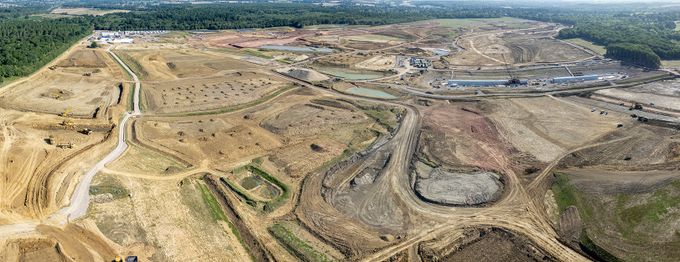
Main contractor Future Water worked across Havant Thicket’s 160ha site in 2025 (credit: Portsmouth Water)
The 2025 earthworks season began in March, focusing on the main embankment. The first phase involved ground improvement at the southern end of the site, which excavated and recompacted material. This was 60% complete when the autumn rain set in. Future Water aims to finish it by mid-2026.
Future Water also cast a trial section of culvert last year. This enabled the contractor to refine the in-situ casting method before construction proper.
The first and second lifts of the reinforced-concrete valve tower have been constructed too. Once complete, this will enable abstraction at different levels of the reservoir.
Along the reservoir’s northern edge, construction of the wetlands embankment is well under way. As of November 2025, concrete structures and pipework were in place in two of four compartments.
Under a separate contract, the pipelines linking the reservoir with Bedhampton springs will comprise 3.4km twin ductile iron pipes. Cut-and-cover construction was originally planned, but tunnel boring will be used for 2.5km of the route to minimise disruption to the surrounding area.
The project team and its structure
Portsmouth Water’s main contractor, Future Water is a joint venture between Mackley Construction and Jones Bros Civil Engineering UK.
Ward & Burke is designing and building the pipelines. Binnies is supplying the panel engineer, in accordance with the Reservoirs Act 1975. AtkinsRéalis has the role of “design guardian”, which includes outline design and planning consent. Mott MacDonald is providing design and construction reviews.
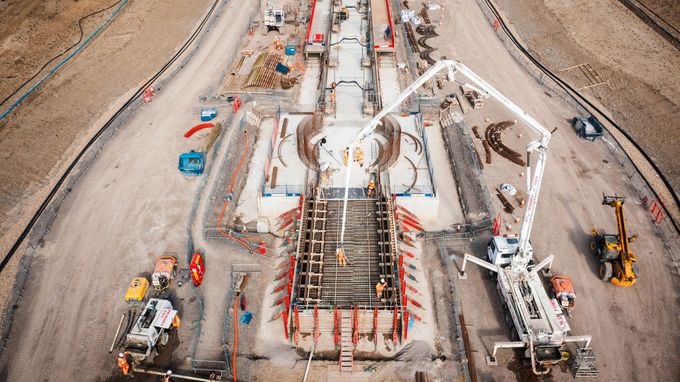
Future Water successfully cast a trial section of culvert at Havant Thicket last year (credit: Portsmouth Water)
Portsmouth Water is enabling a framework for collaboration across the whole enterprise through its use of the NEC4 contract. It says it has done this because “a spirit of mutual trust and cooperation is important to us”.
NEC4 has already been tried and tested by Portsmouth Water and its suppliers, giving all parties a “familiar and consistent approach to contract management”.
The company did make some changes to NEC4, but kept these to a minimum, stressing the importance of using a standard document with a proven record. The contract includes an early-warning process: if any party learns of an issue that could affect time, cost or quality, all parties must meet to discuss it and agree a solution.
Long-term planning: Anglian Water

Anglian Water submitted plans, including this artist’s rendering, for its Fens reservoir to public consultation in Q4 2025 (credit: Anglian Water)
Anglian Water has 20 years’ experience of creating and operating integrated enterprises to deliver ambitious projects. It’s now planning “enterprise delivery” on a grand scale as it makes early preparations for two reservoirs, in Lincolnshire and the Cambridgeshire Fens.
For both assets, the company will create a regulated infrastructure delivery body (known by the acronym Resco).
Broadly following the Thames Tideway Tunnel’s delivery model, the new Resco will act as a dedicated infrastructure provider under Ofwat’s regulatory framework.
It will bring investors, contractors, designers, principal suppliers – and Anglian Water itself – into one entity to design, build and run the reservoirs.
It will be at least five years before the Resco is formed, according to Anglian Water, which has already started with ground investigations and surveys to inform the general layout of the projects. The company is also working on preliminary designs. These must be completed to produce a reference design that will enable it to accurately price the projects and secure the funds required. The reservoirs are likely to be financed using the regulated asset base investment model applied by the Thames Tideway Tunnel and, latterly, the Sizewell C nuclear plant.
Anglian Water has won widespread praise for setting its suppliers stretching targets for carbon reduction and social inclusion alongside more traditional objectives. The Resco will probably make these more stringent and set further goals in areas such as climate resilience, environmental net gain and placemaking.
Learning opportunities
Knowing that the scale and complexity of such projects can pose many delivery problems, company leaders attend monthly meetings to hear about each other’s experiences of planning, procurement and stakeholder engagement. They’re following progress at Havant Thicket Reservoir closely, too, with a particular interest in how the project tackles resourcing and risk management.

According to Anglian Water’s plans, both of its proposed reservoirs will be carefully integrated into their surroundings (credit: Anglian Water)
To address capacity limitations in the supply chain, Anglian Water is courting EU contractors and UK firms that haven’t traditionally worked in the water sector. On schemes of this size, the health of contractors’ balance sheets is as important as their delivery muscle. But the company believes that even the strongest firms will need to partner with others.
The projects’ large scale also creates the opportunity to innovate and find efficiencies in areas such as logistics. Anglian Water is talking to Network Rail about the potential for building rail heads for the delivery of materials, for instance. It’s talking to quarries about directly purchasing aggregates and rock armour, thereby cutting out the middleman. And it’s talking to equipment suppliers about next-generation electrically powered plant.
In July 2025 the company appointed a joint venture between Turner & Townsend, AtkinsRéalis and Mace as its project delivery partner (PDP) under a 15-year contract. This entity will help Anglian Water to manage its capital programmes over Ofwat’s next three regulatory cycles and it will play a vital role in building the team needed for this task.
The PDP will become the Resco’s management arm. Although members of the PDP are experienced in delivering large projects under an enterprise model, they haven’t worked in Anglian Water’s other alliances before. These include its Strategic Pipeline Alliance, which is building a 600km water transfer network for eastern England.
Anglian Water is lobbying for a regulatory change that would allow it to invite tenders to deliver both reservoirs together. At present it’s not permitted do this, so the tendering process would have to be duplicated unless Ofwat relaxes the rules. Combined procurement would offer efficiencies to all parties involved.
International focus: Pure Water San Diego

Under the scheme, recycled wastewater will feed San Diego’s Miramar Reservoir (credit: iStock/Jerry Uomala)
Southern California is one of the most water-stressed parts of the US. Demand for water is rising in this arid region, which is no stranger to the destructive effects of climate change, having suffered deadly wildfires after a drought in January 2025.
To tackle the problem, the state’s southernmost conurbation, San Diego, is boosting its supplies and drought resilience with the help of one of the world’s largest wastewater recycling projects. The Pure Water San Diego scheme will provide nearly half of the city’s water by 2035. Its first phase, expected to be completed in 2026, is set to add 113 million litres to the supply each day.
The project has involved expanding the existing North City Water Reclamation Plant, building new purification facilities and laying pipelines to feed the Miramar Reservoir with the treated wastewater.
Pure Water San Diego is being delivered by a long-term collaboration. The project’s owner, designer and contractor work as an integrated team, combining a progressive design-build approach with a delivery model known as construction manager at risk.
Their integration enables flexibility, which may prove useful as key decisions are made about the second phase. After a 2024 regulatory change in California permitted “direct potable re-use”, the partners have considered injecting purified water directly into the drinking water network, which would be significantly cheaper than installing all of the originally planned pipelines.
Contributors
James Bailey, assistant director for the built county, Staffordshire County Council
Mark Brown, strategy director, Amey Consulting
Steve Denton, executive director and head of civil engineering, WSP
John Dora, director, Climate Sense
Phil Harrison, director, Arup
Scott Haxton, director of capital delivery infrastructure, Transport for London
Russell Jackson, global transit director, AECOM
Dr Hazel McDonald, chief bridge engineer, Transport Scotland
Zoe Metcalfe, global resilience practice leader, AtkinsRéalis
David Porter, director of engineering, Department for Infrastructure, Northern Ireland
Prof David Richards, professor in ground engineering, University of Southampton
Dr Garry Sterritt, head of asset strategy, Transport for London
Dr Joanna White, director of engineering, National Highways
Divik Bandopadhyaya, associate, London Bridge Associates; committee member, British Tunnelling Society
Doug Chisholm, director, Arup
Malcolm Dare, executive director, commercial, procurement and supply chain, Sizewell C
Kate Hall, major projects director, Arup; enterprise director, Great Grid Upgrade
Dr Simon Harrison, group head of strategy, Mott MacDonald
Tom Hughes, assistant director for energy, National Infrastructure and Service Transformation Authority
Eloise John, UK and Ireland energy lead, AECOM
Syinyi Phoon, programme manager, Amentum
John Southgate, head of commercial and performance management, UK Power Networks
Martin Venning, content director, GRID, Meetings of Minds
Simon Adams, programme director, Thames Water
Phil Clisham, independent consultant
Terry Fuller, sales and strategy director, Mackley; project director, Future Water
Mark Malcolm, programme director, major infrastructure, Anglian Water
Garima Singh, commercial and procurement director, Fens and Lincolnshire reservoirs programme, Anglian Water
Mark Tindale, strategy director, Stantec
Samuel Underwood, senior engagement manager, major projects, Southern Water
Dr Sally Watson, water utilities development manager, Mott MacDonald
Andy Alder, managing director, major infrastructure delivery, Anglian Water
Tim Balcon, chief executive, Construction Industry Training Board
Liz Baldwin, director, Southern Integrated Delivery, Southern Renewals Enterprise
Prof Lewis Barlow, decarbonisation head of profession, WSP in the UK
Phil Battle, director, environmental, social and governance, Construction Equipment Association
Viki Bell, chief executive, Construction Equipment Association
Shaun Benzon, head of tidal project development, Liverpool City Region Combined Authority
Brendan Bromwich, technical director for systems thinking, Mott MacDonald
Richard Budd, associate director, Buro Happold
Kirsteen Cacchioli, principal, HKA
Tony Cahill, technical director, SLC Investments
Graham Carr, asset and network manager, Sunderland City Council
Mo Chowdhury, smart city project manager, Sunderland City Council
Mike Corbett, partner, Slaughter and May
Vicky Corcoran, principal engineering geologist, AtkinsRéalis
Simon Cresswell, commercial director, rail and energy, Skanska
John Cully, senior policy adviser, Royal Academy of Engineering
Chris Durham, deputy chief economist, National Infrastructure Service Transformation Authority
Claire Eagle, head of strategy, National Underground Asset Register, Department for Science, Innovation and Technology
Mark Enzer, fellow, Mott MacDonald
John Fagan, global rail leader, Arup
Sandie Forte-Gill, customer director, National Highways
Dr Andrew Garrad, chair, Severn Estuary Commission
Teresa Gonzalez Rico, associate director, AtkinsRéalis
Alison Greenall, principal geotechnical engineer, AtkinsRéalis
Ben Hamer, managing director, Mackley
George Hazel, director, E-Rail
Marie-Claude Hemming, director of policy, Association for Consultancy and Engineering
Dr Ohis Ilalokhoin, engineering director, Cardinal Engineering
Dr Anne Kemp, chair, Nima; fellow and technical director, AtkinsRéalis
Tony King, highways asset manager, Manchester City Council
Peter Kydd, strategic adviser, WSP
Dr Joanne Leach, research fellow, University of Birmingham
Guy Ledger, digital director, AtkinsRéalis
Neil Lloyd, engagement lead, geospatial, Government Digital Service
Darren McClure, chartered civil engineer, AtkinsRéalis
John McGuigan, data and systems officer, Manchester City Council
David McKeown, honorary vice president, Institute of Asset Management
Edmund Metters, partner, Buro Happold
Simon Miles, chief geotechnical engineer, AtkinsRéalis; member, data management committee, Association of Geotechnical and Geoenvironmental Specialists
Chris Plant, technical director, Amey
Prof William Powrie, professor of geotechnical engineering, University of Southampton
Sarah Pye, principal engineer, civil and environment, Heathrow
Rob Scarrott, director of regulatory monitoring, National Highways
Darren Shaw, chair, British Dam Society; associate director, Arup
Elliot Shaw, chief customer and strategy officer, National Highways
Ian Walters, managing director, SLC Rail
Andrew Went, engineering, technical and safety director, East West Rail
Andrew Mylius, author
Sam Gould, ICE director of policy and external affairs
Alex Wynne, ICE knowledge programmes director
Michelle Harbi, ICE head of knowledge production
Neil Cole, ICE knowledge chief sub-editor
Daxa Bharadwa, ICE knowledge engagement lead
James Crumly, ICE knowledge research lead
Barry Davies, ICE editorial knowledge manager
Mark Robson, ICE multimedia knowledge manager
James Brockett, ICE knowledge editorial specialist
Hannah Benson, ICE multimedia knowledge specialist
Mark Hansford, former ICE director of engineering knowledge
James McCarthy, art director
Further resources
- AtkinsRéalis: Funding UK Infrastructure for Growth
ICE Policy: How will the 10-year infrastructure strategy meet the UK’s infrastructure challenge?
ICE Policy: What are the pinch points to delivering on the UK’s infrastructure ambitions?
ICE Policy: What’s next for the UK Infrastructure Pipeline?
- Open Geospatial Consortium and buildingSMART International: Enabling Information Continuity Across BIM-GIS Domains
CPD content:
- Explainer: How to accelerate the transition to low-carbon materials
- Explainer: Six collaborative models set to transform infrastructure delivery
- Explainer: The circular economy
- Infrastructure productivity standard won’t cause corner-cutting, expert assures engineers
- Podcast: How to embed PAS 2080 as the industry norm
- Tech Talk podcasts: Resilience, adaptation and decarbonisation explainers
- Tech Talk video: How engineers can use PAS 2080 to manage carbon
- Tech Talk video: How to achieve a joined-up digital transformation
- Tech Talk video: What engineers can learn from the Flow bridge
- Why the UK needs stronger policy direction on infrastructure resilience
- Department for Transport: Draft Road Investment Strategy 3
HM Treasury: Consultation on the Introduction of Electric Vehicle Excise Duty (eVED)
ICE Policy: ICE submission to the Integrated Transport Strategy for England call for ideas
National Engineering Policy Centre: Reviving Our Ageing Infrastructure
CPD content:
- Explainer: A systems approach to transport projects
- Explainer: How to ensure structural resilience
- Explainer: DfMA for transport projects
- Explainer: What engineers need to learn from common failures
- Tech Talk podcast: The four-minute structural resilience explainer
- Tech Talk podcast: Why structural resilience matters
- Why the UK needs to spend £50bn to salvage its local road network
- Department for Energy Security and Net Zero: Assessment of the Clean Energy Skills Challenge
ICE Policy: How will Great British Energy power the clean energy transition?
National Energy System Operator: Strategic Case for Tidal Range
CPD content:
- Explainer: Ground source heat pumps
- Tech Talk video: How engineers can influence the move to low-carbon energy
- Tech Talk video: How to integrate renewable energy into the grid
- Tidal range power: time to finally take the plunge?
- Environment Agency: Reservoir Safety Reform Programme
ICE Policy: How will the government tackle systemic issues in the water sector?
ICE Policy: Water infrastructure and asset health
Independent Water Commission: Final Report (Cunliffe review)
CPD content:
- Explainer: Decarbonising the water sector
- How PAS 2080 is helping to decarbonise water projects in the East Midlands
- How recycling and re-use could ease the UK’s growing water insecurity
- Tech Talk podcast: The four-minute decarbonising water explainer
- Tech Talk video: How to raise water infrastructure standards worldwide
Sign up to receive news from ICE Knowledge direct to your inbox.